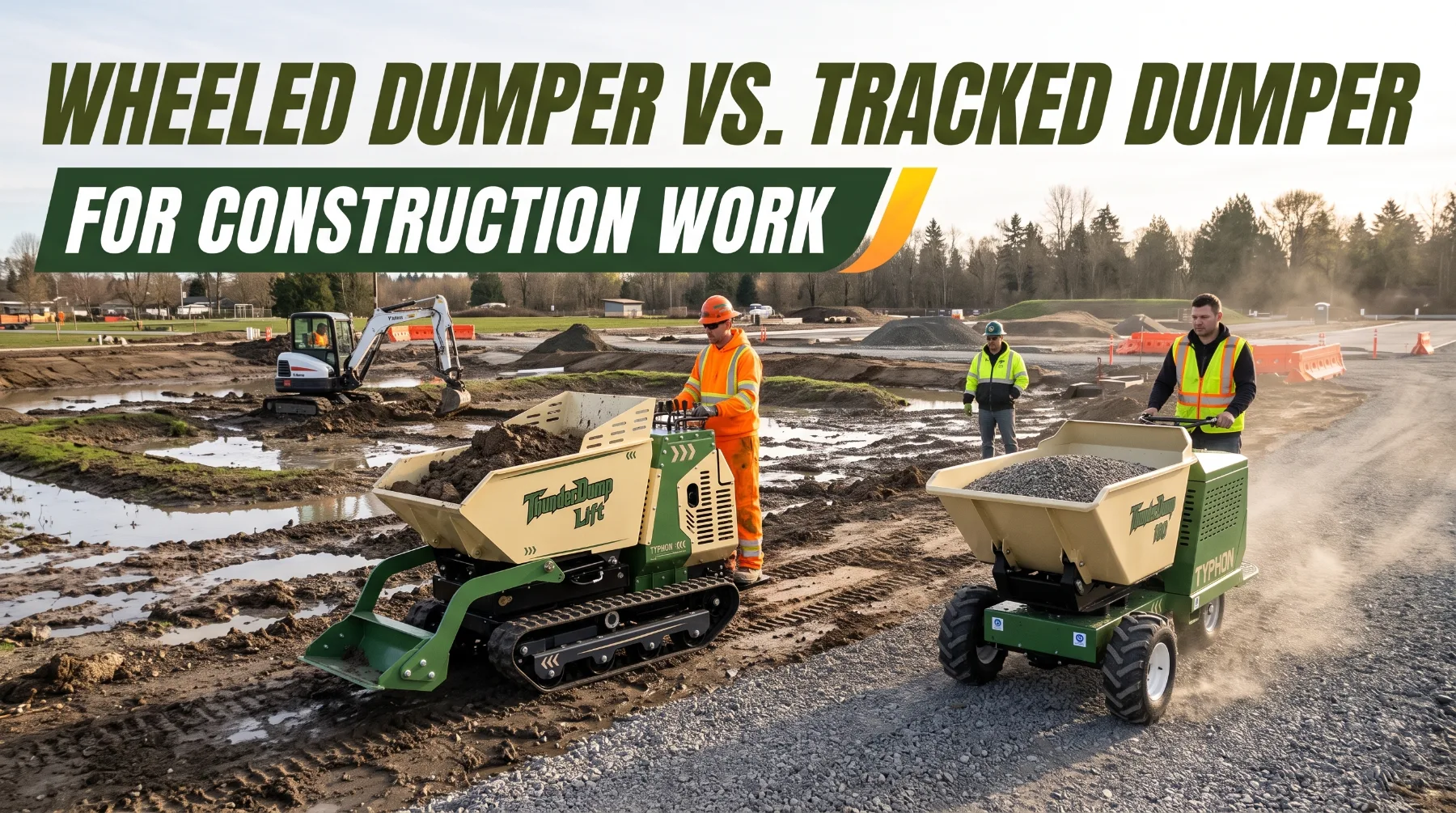
Moving material across a construction site can require different dumper capabilities as ground conditions change. A wetland excavation may leave soft, waterlogged soil around a pond, while a parking lot and access road can provide firm, graded gravel surfaces. Using the same dumper for both areas may limit productivity, increase ground disturbance, or create unnecessary recovery work.
Tracked and wheeled dumpers interact with the ground in different ways. Tracks distribute machine weight across a larger contact area, helping a loaded dumper work across soft or uneven terrain with less risk of sinking and deep rutting. Wheeled dumpers generally perform well on firm surfaces, where their mobility and travel speed can support faster material transport and more efficient loading and dumping cycles.
Matching the dumper configuration to the working environment helps maintain productivity throughout different phases of a project. Tracked models can be useful for wet, loose, or difficult ground, while wheeled models can provide advantages on firm haul routes and prepared surfaces. Considering ground conditions, travel distance, surface quality, payload, and site access helps contractors select the right dumper for each stage of the work.
Wheeled Dumper Mobility
Wheeled dumpers are designed for efficient travel across firm surfaces such as gravel, compacted soil, and paved areas. Their tires generally roll with relatively low resistance, allowing practical travel speeds and efficient material movement between work areas. This can shorten cycle times on longer hauls and make it easier to move around established site routes without the surface scuffing that tracks can cause on hard ground. Many wheeled dumpers also use articulated steering, which helps them follow curves and maneuver through defined haul roads and open work areas.
These mobility advantages depend heavily on ground conditions. On soft, saturated, or loose soil, tires place the machine's weight over smaller contact areas, which can cause a loaded dumper to sink, spin, or create ruts. Tire condition and pressure also affect traction, stability, and travel efficiency, so tires should be maintained at the manufacturer's specified pressure and checked regularly for cuts, sidewall damage, and excessive wear. Selecting a tread suited to the expected conditions and maintaining firm, well-prepared haul roads can help a wheeled dumper deliver more consistent performance.
Key takeaway: Wheeled dumpers travel efficiently across firm surfaces and established site routes, making them well suited to jobs that require frequent movement between work areas.
Tracked Dumper Ground Contact
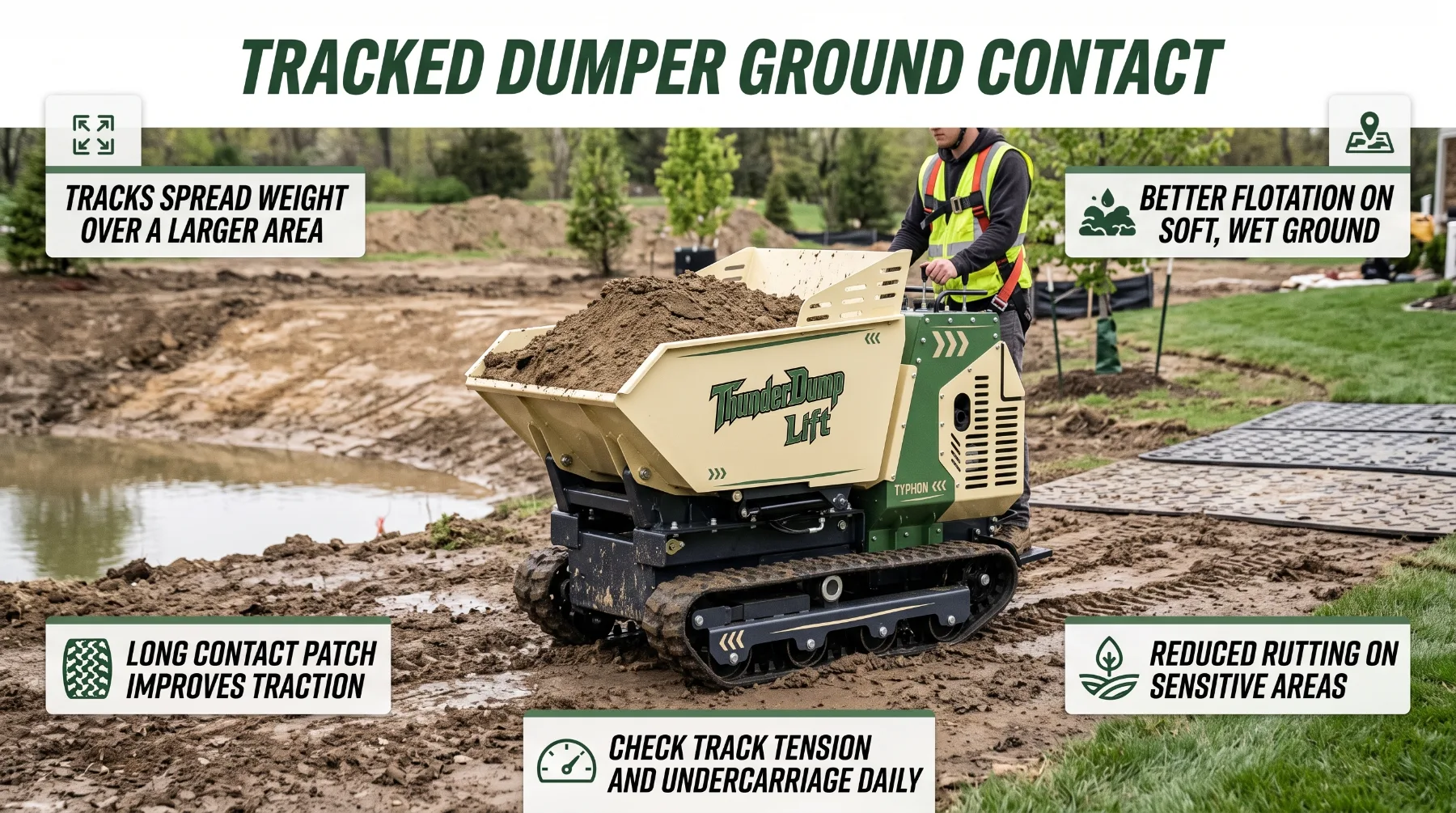
Tracked dumpers distribute the machine's weight across a larger contact area through continuous tracks. This broader footprint reduces ground pressure, helping the machine remain on top of soft, muddy, or uneven surfaces instead of sinking as easily. The same design can also provide useful traction and stability when working on changing terrain.
This makes tracked dumpers practical for difficult ground conditions, but there are some trade-offs. They generally travel more slowly than wheeled machines, and sharp turns on hard or abrasive surfaces can increase track wear or mark finished pavement. Regular undercarriage care is also important, including checking track tension, inspecting rollers and sprockets, and removing packed mud or debris.
Lower Ground Pressure: A wider track contact area spreads the machine's weight across the surface.
Soft-Ground Mobility: Tracks can provide flotation and traction on soft soil, mud, and saturated ground.
Reduced Surface Damage: Weight distribution can help limit rutting on lawns, planting areas, and prepared surfaces.
Rough-Terrain Stability: The broad footprint supports controlled movement across uneven ground within operating limits.
Track Maintenance: Check track tension and undercarriage components regularly, and remove packed debris to support reliable operation.
Key takeaway: Tracked dumpers distribute weight across a larger contact area, reducing ground pressure and supporting travel on softer or uneven ground.
Surface Conditions
Ground conditions can strongly influence whether a wheeled or tracked dumper performs best. On firm, compacted soil, gravel, and paved surfaces, wheeled dumpers generally offer faster and smoother travel, while tracked machines provide steady movement at lower speeds. On mud, saturated ground, soft fill, and loose sand, tracks usually provide better flotation and traction where wheels may sink or spin. Tracks can also help reduce rutting on lawns and landscaped areas, although mats may still be needed to protect sensitive surfaces. On pavement, wheeled dumpers are usually the better choice because tracks can scuff hard surfaces during turns.
Site conditions can change throughout a project, especially after rain or during seasonal changes. Before choosing a machine, walk the haul routes and identify soft spots, drainage issues, slopes, and surface changes. If conditions are mixed, improve problem areas with stone, compacted fill, or ground protection mats. Planning for how the ground may change during the project can help you choose a dumper that remains productive across different working conditions.
Key takeaway: Ground conditions are a key factor when comparing configurations, since firm soil, gravel, pavement, mud, and soft ground each affect how effectively a dumper travels.
Matching the Dumper to the Work
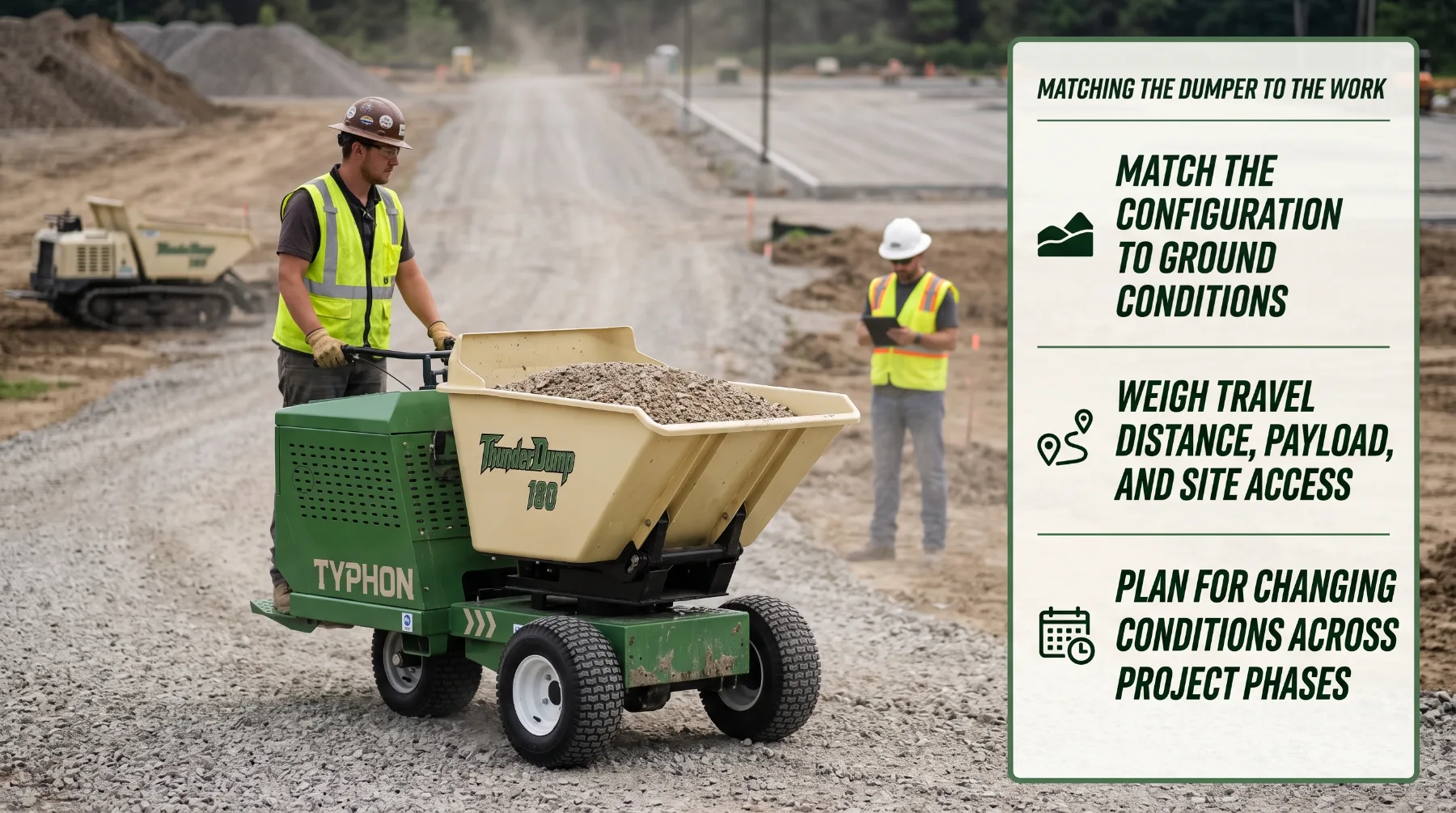
Neither wheeled nor tracked dumpers are automatically better for every application. The right choice depends on the project's payload, ground conditions, haul distance, site access, and material-handling needs. Confirm that the rated payload suits the material density, choose a configuration that can handle the softest and roughest ground, and consider whether longer travel distances favor wheeled speed or difficult terrain favors tracked traction. Also check access points, loading height, dumping method, and whether features such as side tipping or a rotating skip would improve productivity. Since routes and conditions can change during different project phases, the best configuration may change as the work progresses.
Some projects can benefit from using both configurations at different stages. A tracked dumper may be better during early excavation on soft ground, while a wheeled machine can take over once firm haul roads are established. Renting different machines for each phase may be more efficient than relying on one configuration throughout the project. If the requirements are unclear, discuss the payload, ground conditions, haul distances, access, and material-handling needs with your equipment supplier to make a practical choice that supports productivity, limits site damage, and promotes safe operation.
Key takeaway: Neither configuration is automatically better, so weigh payload, ground conditions, travel distance, site access, and material transport needs when comparing wheeled and tracked dumpers.
Maneuverability Around the Site
Site layout can affect which dumper configuration works best. Open haul roads with wider turning areas often suit wheeled dumpers with articulated steering, while tracked dumpers can be easier to maneuver in confined spaces. Consider the width and condition of travel paths, available turning room, slopes, gates, side yards, and the space around loading and dumping points. Some tracked models also offer a rotating skip or swivel platform that allows side dumping without repositioning the entire machine. Since features vary, check the specifications of the specific model before making a decision.
Slopes require careful operation with either configuration. Plan routes that allow loaded travel straight up and down inclines rather than across them, avoid turning on slopes, and follow the manufacturer's limits for travel direction and maximum grade. Consider how the machine will approach the excavator and dump area so unnecessary repositioning and reversing can be reduced. Keep workers clear of travel paths, and use a spotter when visibility is restricted.
Key takeaway: Site layout affects the practical advantages of each design, so consider turning areas, travel paths, slopes, restricted spaces, and how the machine will move between loading and dumping points.
Transport Requirements
Transport and site access should be part of the dumper selection process, especially when the machine will move between multiple jobsites. Check the machine's weight and dimensions against your trailer and tow vehicle, and make sure there is a firm, level area for safe loading and unloading. Measure gates, overhead clearances, and narrow access points before delivery, and consider how the machine will move across paved roads, finished surfaces, or other restricted areas. Frequent relocation can add transport time and costs, so these requirements should be considered when planning the project.
Tracked dumpers are generally transported by trailer because their tracks are not intended for regular road travel and can damage pavement. Some wheeled dumpers may be approved for limited road use, but requirements vary by location, so check local regulations before using public roads. During transport, lower the skip, use the manufacturer's designated tie-down points, and follow applicable load-securement requirements. Check the planned route for low bridges, weight restrictions, tight turns, and other access limitations before hauling.
Key takeaway: Wheeled and tracked machines can have different transport and access considerations, so plan how the dumper will reach the jobsite and move between work areas before selecting a configuration.
Conclusion
Wheeled and tracked dumpers provide different advantages depending on ground conditions, haul routes, access, and transport requirements. Wheeled models generally offer efficient travel on firm surfaces and established routes, while tracked models distribute their weight over a larger contact area to provide greater flotation and traction on soft or uneven ground. Before operation, contractors should assess the softest ground, slopes, mud, obstacles, turning areas, loading zones, and dump points along the planned route. Wheeled machines require attention to tire pressure and damage, while tracked machines require inspection of track tension, rollers, idlers, sprockets, and undercarriage condition. Brakes, steering, lights, alarms, rollover protection, and seat belts should also be checked before work. Matching payload, ground conditions, mobility, maneuverability, transport requirements, and site layout helps determine which dumper configuration can move material efficiently and reliably.
Frequently Asked Questions
What is the main difference between a wheeled and tracked dumper?
A wheeled dumper uses tires for ground contact, while a tracked dumper uses continuous tracks. Tracks spread the machine's weight over a larger contact area, which can improve flotation on soft ground. Wheeled dumpers typically offer faster travel and easier movement on firm, prepared surfaces.
Which dumper is better for soft ground?
A tracked dumper is often more suitable for soft, muddy, or uneven surfaces because its tracks distribute weight across a larger contact area. This can help reduce ground pressure, sinking, and rutting. Track performance still depends on ground conditions, slope, payload, and the machine's operating limits.
Are wheeled dumpers useful on firm surfaces?
Yes. Wheeled dumpers are well suited to construction sites with firm travel routes, paved areas, and frequent movement between work areas. Their tires allow efficient travel and maneuverability on suitable surfaces, and they can often complete longer material-hauling routes more quickly than tracked machines.
How should contractors compare the two types?
Contractors should consider ground conditions, payload, travel distance, site access, maneuverability, transport requirements, and expected work cycles. Wheeled dumpers may suit firm sites and longer travel routes, while tracked models can be advantageous on soft or uneven terrain. The best choice depends on the specific jobsite and material-handling requirements.