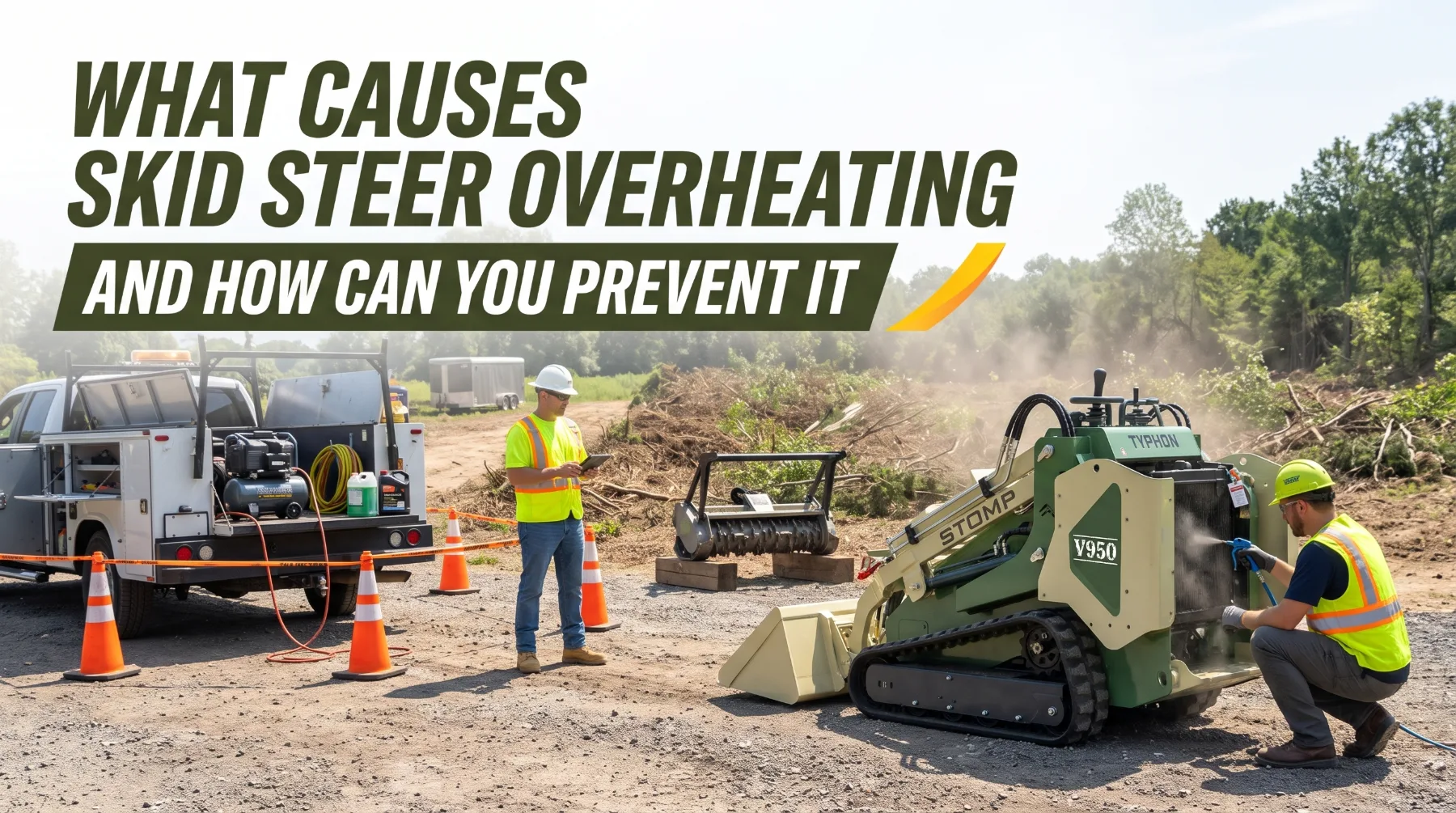
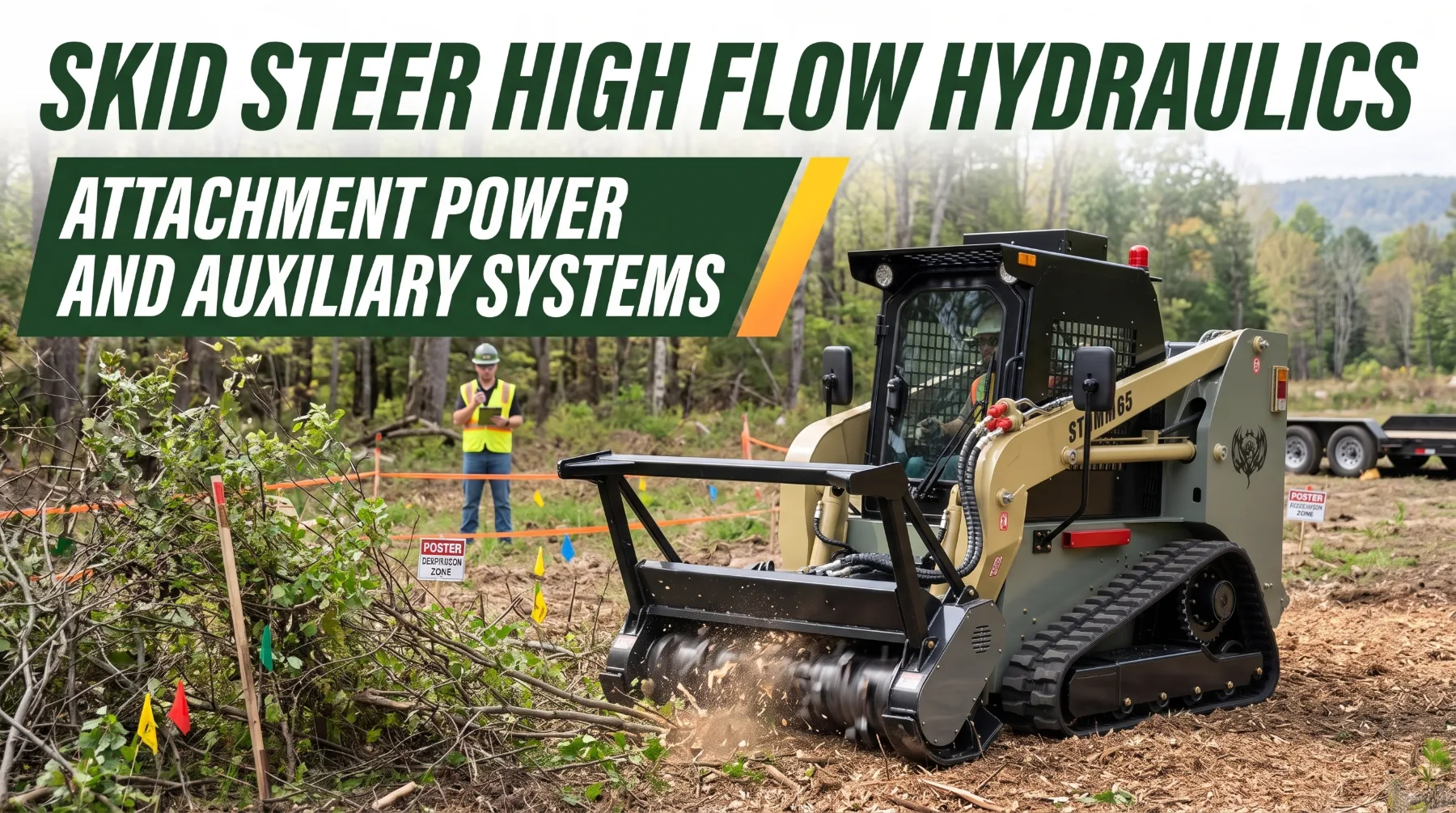
A land-clearing contractor takes on a two-acre right-of-way project overgrown with brush and small trees. He rents a forestry mulcher, hooks it to his standard-flow skid steer, and starts cutting. The rotor spins, but every time it meets a 4-inch sapling, it bogs, slows, and stalls. Progress is painfully slow, and by midafternoon the hydraulic temperature warning is flashing. The next week, he runs the same job with a high-flow machine and a mulcher built for that flow range. The rotor holds speed through dense growth, the operator clears material steadily, and the temperature gauge stays in its normal range. The attachment type was the same. The difference was a hydraulic system matched to the attachment's requirements.
High-flow hydraulics expand what a skid steer loader can accomplish. They allow the machine to power attachments that need more hydraulic oil per minute than a standard auxiliary circuit can deliver. Mulchers, cold planers, trenchers, snow blowers, stump grinders, and rock saws all fall into this category. High-flow capability doesn't guarantee compatibility, though. Flow, pressure, connections, case-drain requirements, electrical controls, cooling capacity, attachment weight, and rated operating capacity must all line up. When they do, the attachment runs at its designed speed and power. When they don't, performance suffers and components can fail.
Hydraulic Flow and Attachment Operating Speed
Different attachments depend on speed in different ways. A forestry mulcher needs high rotor speed to shred wood cleanly and keep momentum through dense material. A cold planer needs consistent drum speed to cut asphalt or concrete at an even depth with a uniform finish. A trencher needs steady chain speed to clear spoil as the machine advances. A snow blower needs impeller speed to throw snow clear of the work area rather than dropping it beside the chute.
Actual performance also depends on the attachment's mechanical design and the material being worked. A mulcher with a heavier rotor stores more momentum but takes longer to reach speed. A cold planer cutting reinforced concrete meets more resistance than one milling asphalt. Compare the machine's auxiliary flow rating with the attachment's required operating range, and confirm that the flow measured at the couplers, not just the pump rating, falls within that range.
Auxiliary Hydraulic Circuits and Connections
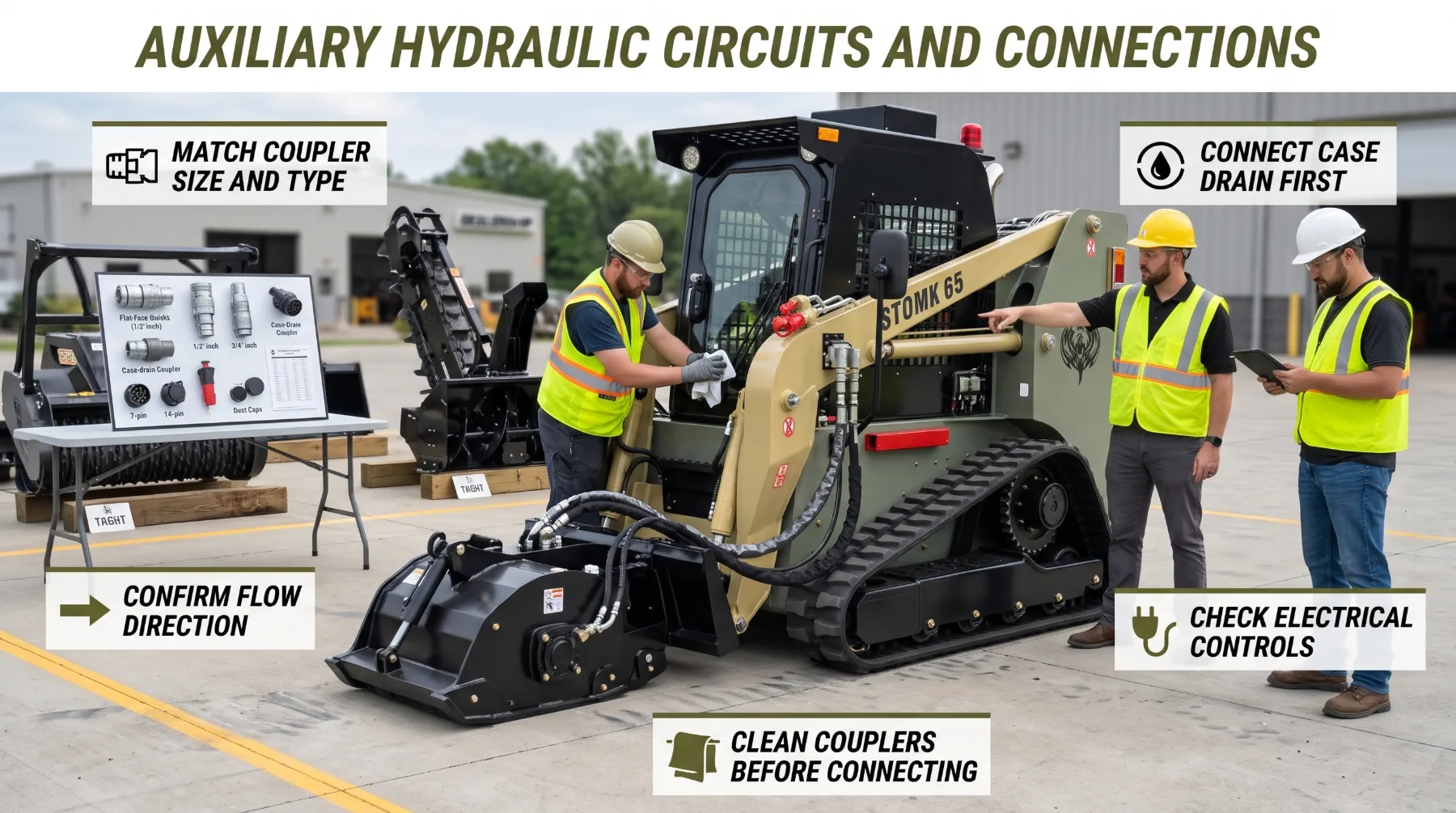
The auxiliary circuit connects the skid steer's hydraulic system to the attachment, and correct connections matter as much as flow and pressure. A high-flow attachment connected to the wrong ports, or without a required case drain, can perform poorly or suffer serious damage within minutes.
Most skid steers use flat-face quick couplers at the front of the lift arm. Standard-flow circuits commonly use 1/2-inch couplers, while high-flow circuits often use larger couplers, such as 3/4-inch or larger, to carry more oil with less restriction. Flat-face couplers reduce spillage and keep contamination out better than older poppet-style designs. Wipe both coupler halves clean with a lint-free cloth before every connection, and fit dust caps on open couplers. Dirt that enters through a coupler circulates through the entire hydraulic system.
Many high-flow attachments also require a case-drain line. Hydraulic motors leak a small amount of oil internally to lubricate and cool their components. That oil collects in the motor case and must return to the tank through a separate, low-pressure line. If the case drain is missing, blocked, or connected incorrectly, pressure builds inside the motor case and can blow out the shaft seal or damage the motor housing. Confirm that the machine has a case-drain port where the attachment requires one, and always connect it first and disconnect it last, as many manufacturers recommend.
Return-line configuration matters too. Some attachments need a free-flowing return path to the tank with minimal back pressure. Others run in both directions and need reversible flow. Many machines offer a continuous-flow or detent function that keeps oil moving to the attachment without the operator holding a control. Confirm whether the attachment requires unidirectional or bidirectional flow, and set up the circuit to match.
Before connecting or disconnecting any auxiliary hose, lower the attachment to the ground, shut down the engine, and relieve auxiliary pressure using the procedure in the operator's manual. Trapped pressure makes couplers difficult to connect and can cause them to release oil suddenly.
Key takeaway: Confirm coupler size and type, case-drain requirements, return-line configuration, flow direction, and electrical connections before installation. Connect the case drain first and disconnect it last, keep couplers clean, and relieve auxiliary pressure before handling hoses.
Cooling Capacity and Continuous Attachment Work
Every horsepower the hydraulic system produces that doesn't become useful work turns into heat. High-flow attachments such as mulchers, cold planers, and stump grinders often run continuously for hours at a time, placing sustained demand on the system. If the cooling system can't remove heat as fast as the machine generates it, oil temperature rises, efficiency falls, and component life shortens.
Excess heat causes real damage. Hot oil thins, which increases internal leakage in pumps and motors and reduces attachment performance. Seals harden and crack, and oil oxidizes and loses its ability to lubricate. Many machines reduce engine or hydraulic output automatically when temperatures climb too high, which protects components but cuts productivity.
Several practices keep temperatures under control. Keep cooler cores clean, especially in dusty, chip-filled, or leaf-heavy environments such as mulching and land clearing. Use reversible fans where fitted to blow debris back out of the cores. Check hydraulic oil level and condition at the intervals the manual specifies, and replace filters on schedule. Use the oil type and viscosity grade the manufacturer requires. Watch the hydraulic temperature gauge throughout the shift, and avoid stalling the attachment against heavy resistance, which forces oil over the relief valve and turns power directly into heat. When a temperature warning appears, reduce load, let the system cool, and find the cause rather than continuing to work.
Consider a crew mulching dense brush on a hot summer afternoon. Fine chips pack into the cooler fins within a few hours, and oil temperature climbs steadily. Scheduling a brief stop to engage the reversible fan and clean the cooler, with the machine shut down and locked out, restores cooling capacity and keeps the mulcher running at full speed for the rest of the day.
Key takeaway: Continuous high-flow work generates substantial heat that the cooling system must remove. Keep coolers clean, use reversible fans, maintain oil and filters, avoid stalling the attachment, and investigate every temperature warning promptly.
Matching High-Flow Attachments to the Skid Steer
Choosing the right attachment starts with the machine's approved specifications, not the attachment's brochure. A high-flow machine may offer more attachment options, but the complete machine configuration must still remain within approved limits. Compatibility depends on several factors working together.
Start with hydraulic requirements. Compare the attachment's required flow range and pressure with the machine's auxiliary output measured at the couplers. Confirm coupler size, case-drain needs, flow direction, and electrical connections. Some attachments specify a minimum flow to perform properly and a maximum flow to avoid overspeeding. The machine should fall comfortably inside that window.
Finally, review the work itself. Consider the attachment's working width, the material you'll process, the terrain, and the hours of continuous operation you expect. Confirm warranty requirements with both the machine and attachment manufacturers, since running an incompatible attachment can affect coverage. Ask your dealer to verify compatibility in writing before you buy or rent specialized equipment.
Key takeaway: Confirm flow, pressure, couplers, case drain, electrical controls, weight, and rated operating capacity before choosing an attachment. Install required guarding for mulching, verify compatibility with your dealer, and keep the complete configuration within approved limits.
Safe Operation, Leak Checks, and Lockout
High-flow attachments combine powerful hydraulics with fast-moving cutting, grinding, and throwing components. Safe habits protect operators, ground crews, and bystanders throughout the job.
During operation, set an exclusion zone sized for the attachment. Mulchers and cold planers can throw debris well beyond the machine, and snow blowers can throw ice and hidden objects. Keep people well outside that zone. Before leaving the seat, stop the attachment, lower it to the ground, and wait for rotors, drums, or impellers to come to a complete stop. Many of these components coast for some time after flow stops. Never clear a jammed rotor, drum, chain, or chute with your hands or a tool while the machine is running. Operators should wear the seat belt and keep the seat bar lowered, and never bypass operator presence controls or attachment interlocks.
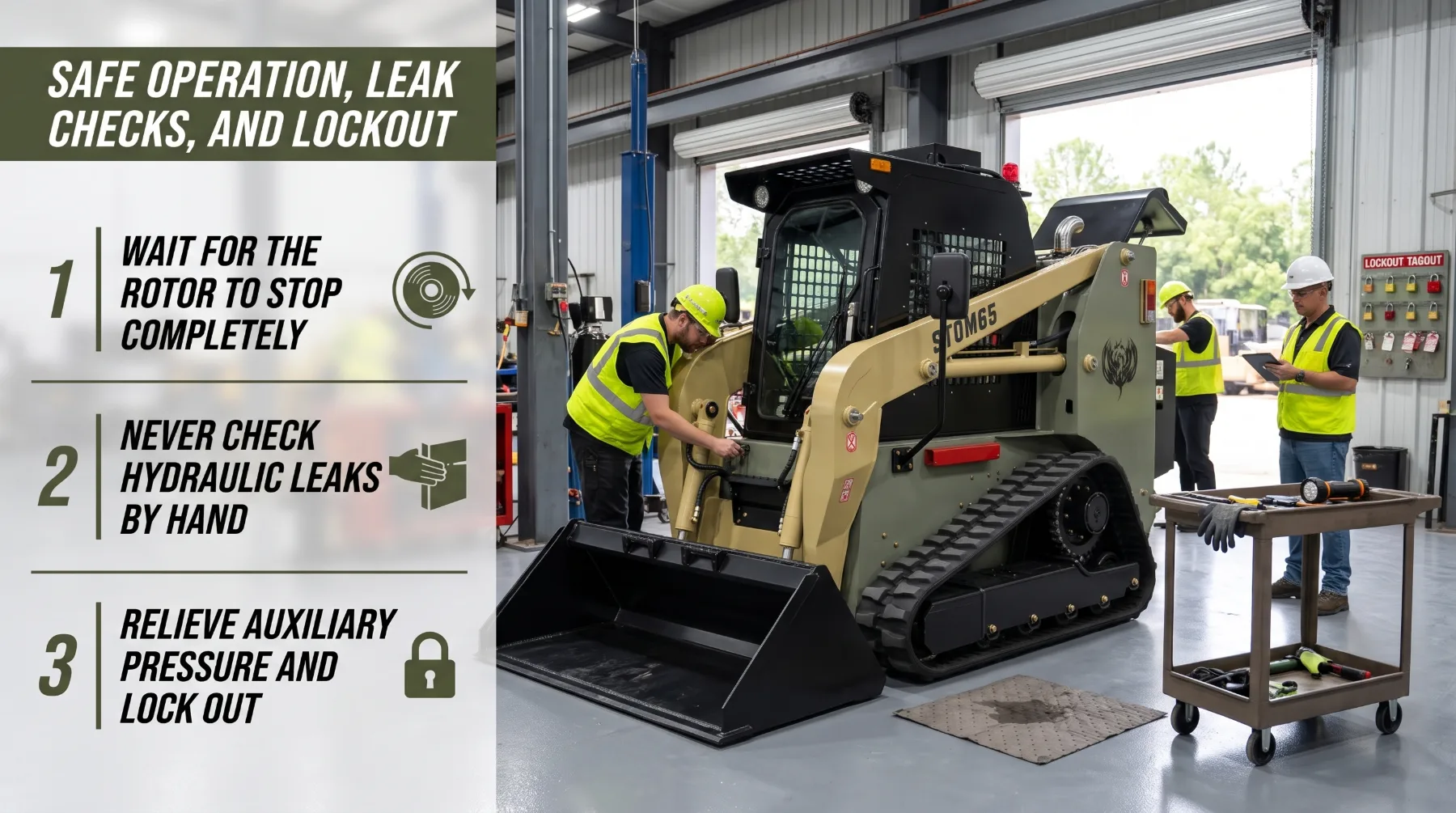
High-flow hoses carry large volumes of oil at high pressure. Never use your hand to search for a hydraulic leak. Fluid escaping through a pinhole under pressure can penetrate skin and cause an injection injury. The wound may look like a minor puncture at first, but it's a medical emergency that requires immediate surgical treatment. Use a piece of cardboard or wood held near the suspected hose, fitting, or coupler, wear gloves and eye protection, and keep your face and body out of line with the leak point. If anyone is struck by escaping hydraulic fluid, get emergency medical care at once and tell medical staff it's a hydraulic injection injury.
If the lift arms must remain raised for access, engage the manufacturer's approved lift arm support device. Never work beneath raised lift arms or an attachment held only by hydraulics, and never rely on improvised blocking. Allow hot oil, coolers, and attachment components to cool before servicing them. Leave motor, pump, valve, and relief pressure work to qualified technicians using the manufacturer's procedures.
Key takeaway: Set a wide exclusion zone, wait for rotors to stop before leaving the seat, and never clear jams while the machine runs. Check leaks with cardboard rather than your hands, and stop the attachment, lower it, relieve pressure, and lock out before any service.
Conclusion
High-flow hydraulics allow skid steer loaders to power attachments that demand more oil flow, higher operating speeds, and greater hydraulic horsepower than standard-flow circuits provide. Flow determines how fast attachment motors turn, while pressure determines the torque and force they deliver. Together, they define the hydraulic power available for mulching, milling, trenching, and snow removal. Correct couplers, case-drain lines, return configurations, and electrical controls ensure that power reaches the attachment safely. Adequate cooling keeps continuous work productive.
Inspection operators should know the attachment's required hydraulic flow rate, operating pressure, and connection type before use. They should also inspect hydraulic hoses, couplers, fittings, case-drain lines, and cooling components for leaks, damage, loose connections, and excessive heat. Both inspection operators and machine operators must confirm that the attachment's hydraulic requirements, weight, and guarding meet the manufacturer's approved limits before operation.
Frequently Asked Questions
What are high-flow hydraulics on a skid steer?
High-flow hydraulics are auxiliary hydraulic systems designed to deliver a greater volume of oil per minute than standard-flow circuits. Standard flow commonly falls around 17 to 25 gallons per minute, while high flow commonly ranges from about 30 to 45 gallons per minute. High-flow systems typically include larger pumps, hoses, couplers, and coolers to handle the extra oil and heat. They allow the machine to power demanding attachments such as mulchers and cold planers.
Does high flow automatically make an attachment more powerful?
No. Flow sets motor speed, but power also depends on pressure, motor displacement, and the attachment's mechanical design. An attachment built for standard flow can overspeed and suffer damage if it receives high flow. Performance comes from matching the machine's flow and pressure to the attachment's approved operating range, then operating it within its intended application.
Which attachments may require high-flow hydraulics?
Many forestry mulchers, cold planers, stump grinders, rock saws, and wheel saws require high flow. Some trenchers and snow blowers are available in both standard-flow and high-flow versions, with the high-flow models digging faster or throwing snow farther. Always check the attachment manufacturer's flow and pressure requirements before selecting a machine.
Can a high-flow attachment operate on a standard-flow skid steer?
Only if the attachment manufacturer approves that configuration and the machine meets its hydraulic, electrical, and capacity requirements. Otherwise, the attachment may run slowly, stall under load, overheat the hydraulic system, or suffer component damage. Verify compatibility with your dealer before purchasing or renting high-flow equipment.