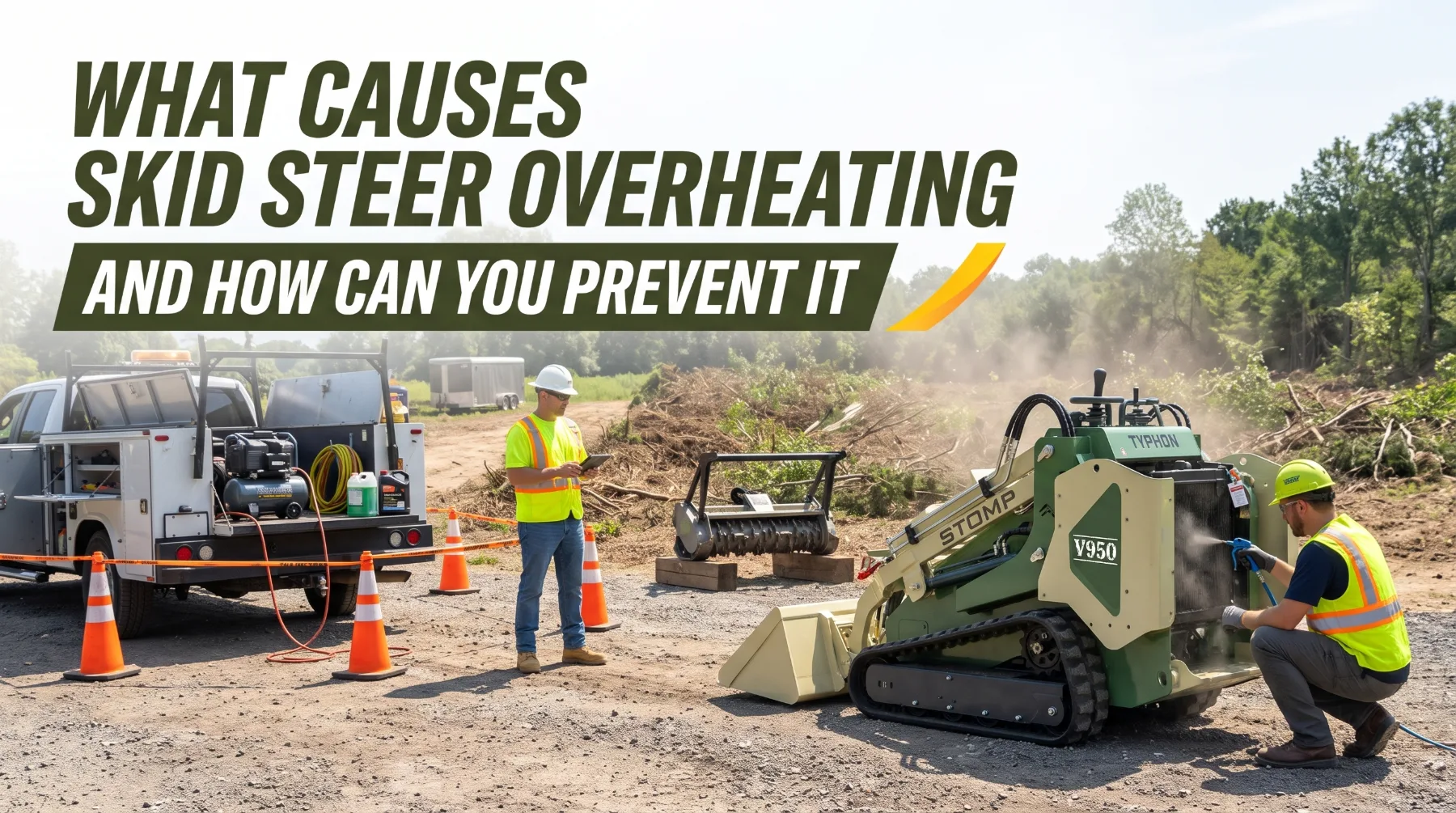
A skid steer can go from full productivity to a flashing temperature warning in a single afternoon. A landscaping crew mulching overgrown lots notices the hydraulics slowing as the day warms. A demolition contractor pushing debris in a dusty building shell sees the engine temperature climb steadily. A grading crew working in tall, dry grass finds the rear screen packed with chaff by lunch. In each case, the machine is telling the operator the same thing: heat is building faster than the cooling system can remove it.
Overheating is more than an inconvenience. Sustained high temperatures thin engine oil, strain head gaskets, and stress pistons and bearings. In the hydraulic system, excess heat breaks down oil, hardens seals, and speeds up wear on pumps, motors, and valves. Many modern skid steers protect themselves by reducing engine power or limiting hydraulic output when temperatures climb. That protection helps, but it also means slower cycles, stalled attachments, and lost production. Left unchecked, repeated overheating can lead to costly repairs and extended downtime.
The good news is that most overheating problems have predictable causes and give clear warning signs. Restricted airflow, low coolant, hydraulic overload, mismatched attachments, and worn cooling components account for the large majority of cases. Operators and maintenance teams who understand these causes can catch problems early and keep machines running at safe temperatures through the hottest, dustiest work.
Restricted Radiator and Cooling Airflow
A skid steer's cooling system depends on air moving freely through its heat exchangers. Most machines use a cooling package at the rear, often with the engine radiator, the hydraulic oil cooler, and on turbocharged diesel models a charge air cooler stacked together or placed side by side. A fan pulls or pushes air through these cores, carrying heat away from the coolant and oil. When anything blocks that airflow, every system in the package runs hotter at once.
Skid steers work in some of the dirtiest conditions on any jobsite. Dust from demolition and grading, grass clippings, leaves, seeds, cottonwood fluff, mulch fibers, and dried mud all get drawn toward the cooling package. Debris first collects on the rear grille or intake screen, then works its way into the fins of the cores themselves. A thin mat of fine material can cut airflow sharply, even when the screen looks only lightly coated. Stacked cores trap debris between layers, where it's hard to see without opening the cooling package.
Signs of restricted airflow tend to build gradually. Engine and hydraulic temperatures climb faster than usual, particularly during heavy work or on hot days. The fan may run louder or longer, and the machine may enter a power-reduction mode more often. Visible debris on the rear screen, matted material between cores, or bent and flattened fins all point to the same problem.
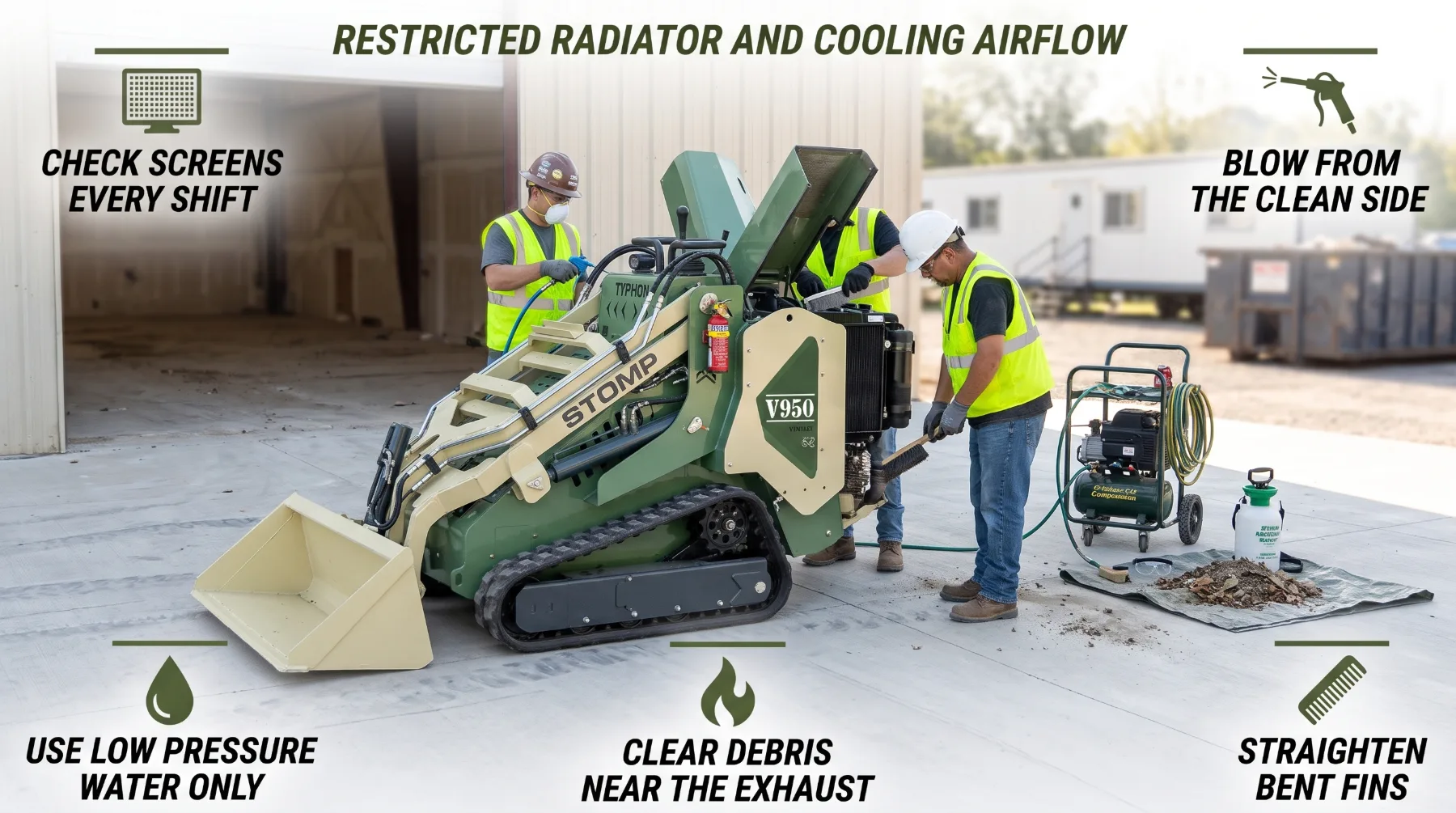
Cleaning the cooling package should be part of the daily routine, and more frequent in heavy debris conditions. Many manufacturers recommend checking the screens several times a shift when mulching, sweeping, or working in tall grass. Before cleaning, lower the attachment to the ground, shut down the engine, remove the key, and allow the machine to cool. Open the access doors or tilt the cooling package as the manual instructs. Remove loose debris by hand or with a soft brush, then clean the cores using the method the manufacturer specifies.
Compressed air and water both work when used carefully. Blow air from the clean side of the core toward the dirty side, opposite the normal direction of airflow, so debris is pushed out rather than packed deeper. Keep air pressure within the manufacturer's guidance and wear eye protection. If using water, use low pressure and keep the nozzle at a safe distance and straight on to the fins. High-pressure washers can bend fins flat and reduce cooling just as effectively as dirt. Straighten bent fins with a fin comb where needed.
Key takeaway: Inspect and clean the rear screens and cooling cores daily, and several times a shift in heavy debris, using compressed air or low-pressure water from the clean side, and always shut down and let the machine cool first.
Hydraulic System Overheating
A skid steer's hydraulic system turns engine power into lift, tilt, drive, and attachment work. That conversion is never perfectly efficient. Some energy is always lost as heat through friction, internal leakage, and pressure drops across valves, hoses, and couplers. Under normal conditions, the hydraulic oil cooler carries that heat away. When heat builds faster than the cooler can remove it, oil temperature climbs.
Several conditions commonly cause hydraulic overheating. A clogged or restricted hydraulic oil cooler, often from the same debris that blocks the radiator, reduces heat removal. Low oil level means less fluid to absorb and release heat. Restricted filters raise pressure drop and generate heat, and some systems open a bypass that sends unfiltered oil through the circuit. Incorrect oil type or viscosity can thin excessively at temperature or resist flow when cold. Worn pumps and motors leak internally, turning more energy into heat.
Check hydraulic oil level with the machine on level ground and the lift arms and attachment positioned as the manual instructs. Use only the oil type and viscosity the manufacturer specifies, keep fill points clean, and replace filters and the tank breather on schedule. During service checks, look at the oil. Dark oil with a burnt smell suggests overheating, while milky oil points to water contamination.
Inspect hoses and fittings for leaks, abrasion, and damage. Never use your hand to search for a hydraulic leak. Fluid escaping through a pinhole under pressure can penetrate skin and cause an injection injury. The wound may look minor, but it's a medical emergency that requires immediate surgical treatment. Use a piece of cardboard or wood, and wear gloves and eye protection. Hot hydraulic oil can also cause burns, so let the system cool before inspection or service.
Key takeaway: Keep the hydraulic oil cooler clean, maintain oil level and filters with the specified fluid, avoid holding controls against relief, and always check hydraulic leaks with cardboard rather than your hands.
Excessive Engine and Attachment Demand
Every skid steer has a cooling system sized for its engine output and hydraulic capacity under expected working conditions. When the machine runs at or near full load for long periods, it produces heat at a high rate. In hot weather, at high altitude, or in dusty conditions, the cooling system has less margin to handle that load. Long stretches of heavy digging, pushing into stockpiles, climbing grades with a full bucket, or running a demanding attachment without a break can push temperatures past safe limits.
Attachments are a frequent cause. Powered tools such as forestry mulchers, cold planers, stump grinders, trenchers, brush cutters, and snow blowers can draw heavily on the hydraulic system for hours at a time. Each attachment has a minimum and maximum flow and pressure range set by its manufacturer. When an attachment needs more flow than the machine can supply, it runs slowly, stalls, and pushes the system against its relief setting, generating heat. When a machine supplies more flow than an attachment can accept, motors can overspeed and excess oil may pass over relief valves, creating heat in a different way.
Operating technique helps as well. Let the machine reach normal operating temperature before applying full load, especially in cold weather. In heavy work, use the engine speed and attachment settings the manufacturer recommends rather than running everything at maximum. Ease into dense material instead of plunging an attachment and stalling it. On long mulching or cutting jobs, plan brief breaks where the attachment runs unloaded or idles so the cooling system can catch up, and use those pauses to check and clean the screens.
Many modern diesel skid steers also perform aftertreatment regeneration, which raises exhaust temperatures. Follow the manufacturer's guidance on regeneration, keep the area around the exhaust and aftertreatment components free of debris, and never park a machine during or immediately after regeneration over dry grass or combustible material.
Key takeaway: Match each attachment's flow, pressure, and connection requirements to the machine, use high-flow tools only on high-flow-equipped skid steers, avoid stalling attachments against relief, and build cooling breaks into long, heavy work.
Fan, Belt, and Cooling Component Problems
Even a clean cooling package and a full coolant system can't keep the machine cool if the components that move air and coolant aren't working. The fan, its drive, the shroud, the water pump, the thermostat, and the radiator cap all play a part. A weakness in any one of them can cause overheating that doesn't respond to cleaning or topping up fluids.
Many skid steers use a belt-driven fan, while others use a hydraulically driven fan controlled by temperature sensors. On belt-driven systems, the same belt may also drive the water pump and alternator. A belt that's loose, glazed, cracked, frayed, or contaminated with oil can slip, reducing fan speed and coolant flow just when the engine needs them most. A squealing noise on start-up or under load is a common sign of slipping. Inspect belts during scheduled service for cracks, missing chunks, shiny glazing, and correct tension, following the manufacturer's procedure. Check pulleys and the tensioner for wear, wobble, or noise.
Hydraulically driven fans bring their own checks. A faulty temperature sensor, control valve, or fan motor can keep the fan from reaching full speed. If the fan seems slow or doesn't respond as temperatures rise, have a qualified technician test the fan drive system using the manufacturer's diagnostic procedures.
Look at the fan itself and the shroud around it. Cracked, bent, or missing fan blades reduce airflow and can throw pieces with dangerous force. The shroud directs air through the cores rather than around them, so a cracked, loose, or missing shroud can sharply reduce cooling efficiency. Seals around the cooling package serve the same purpose, keeping air from bypassing the cores.
Other components can fail quietly. A thermostat stuck closed or partly closed restricts coolant flow to the radiator, causing temperatures to climb even with a clean, full system. A worn water pump may leak from its weep hole or fail to move enough coolant. A radiator cap with a weak seal or spring lets the system lose pressure, which lowers the coolant's boiling point and can cause coolant loss through the overflow. Internal radiator blockage from scale or deposits restricts flow even when the outside of the core is clean.
These repairs often involve hot, pressurized systems and moving parts. Before inspecting the fan, belts, or any cooling component, lower the attachment, shut down the engine, remove the key, apply your site's lockout procedure, and let the machine cool. Never reach near the fan or belt while the engine is running, and remember that hydraulically driven fans may start automatically on some machines when the key is on. Investigate unusual noises, vibration, or warning indicators promptly, and have qualified technicians handle repairs to pressurized or hot cooling systems.
Key takeaway: Inspect belts, the fan, the shroud, and cooling seals during scheduled service, investigate squealing, vibration, or slow fan response promptly, and lock out and let the machine cool before working near any cooling component.
Preventive Maintenance and Temperature Monitoring
Overheating is far easier to prevent than to repair. A consistent maintenance routine, combined with attentive monitoring during operation, catches most cooling problems while they're still minor. That routine starts with the daily walk-around and continues through every scheduled service.
Before each shift, check the coolant level in the reservoir with the engine cool and the hydraulic oil level with the machine positioned as the manual instructs. Inspect the rear screens and cooling cores for debris, and clean them as needed. Look beneath the machine and around the engine compartment for coolant or oil leaks, using cardboard rather than your hands near hydraulic components. Check visible hoses and clamps for cracks, swelling, and looseness. Clear debris from the engine compartment, especially around the exhaust and turbocharger. Confirm that temperature gauges and warning lights work when the key is turned on.
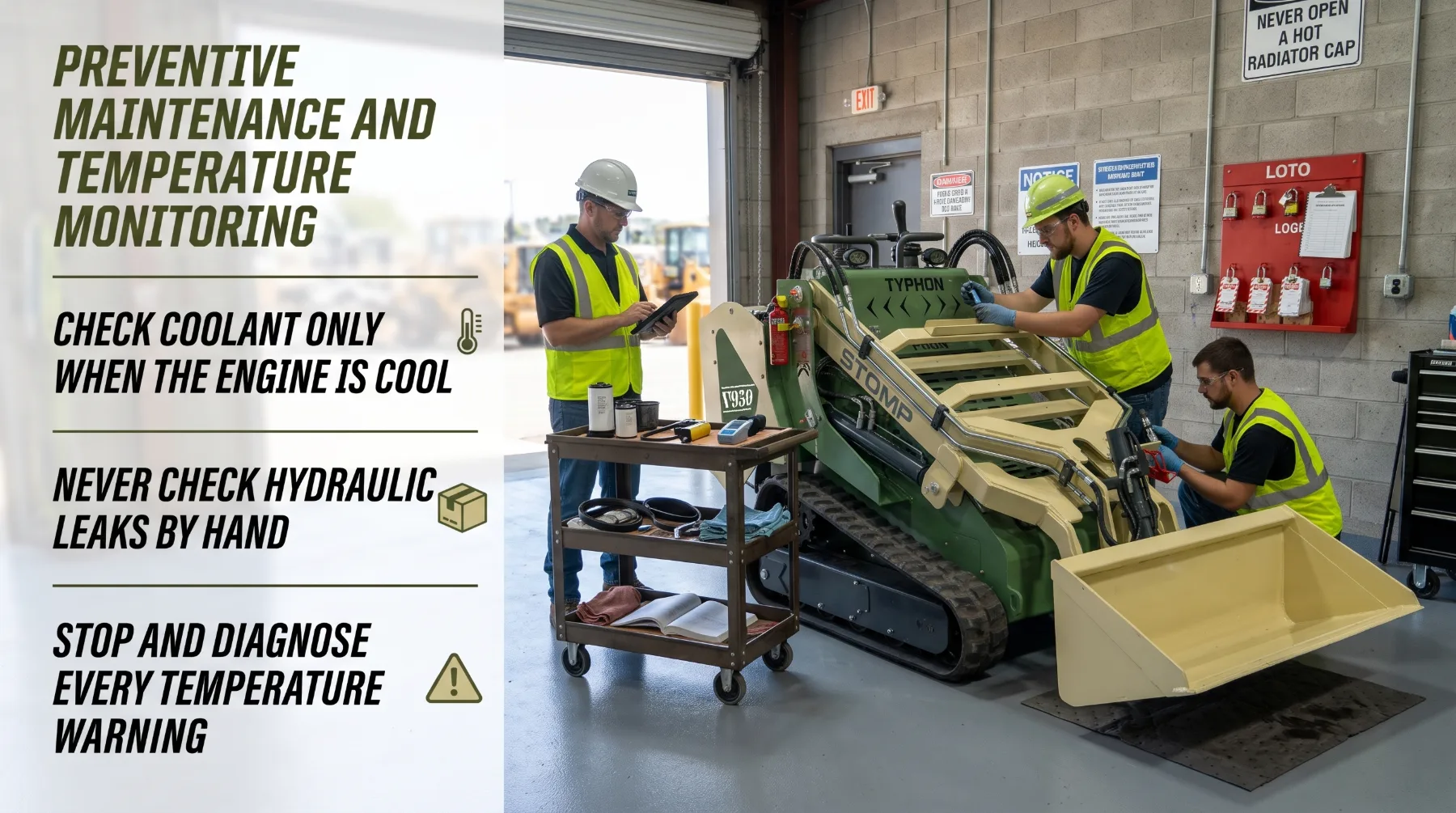
Scheduled maintenance builds on those checks. Replace engine oil, hydraulic oil, filters, and the hydraulic tank breather at the manufacturer's intervals, and shorten those intervals where the manual allows for severe conditions such as heavy dust, high temperatures, or continuous attachment work. Test coolant concentration and condition, and change coolant on schedule. Inspect belts, the fan, the shroud, and the radiator cap. Keep records of operating hours, inspections, fluid top-ups, and repairs for every machine. A pattern of frequent coolant top-ups or rising operating temperatures often points to a developing problem long before a breakdown.
Monitoring during operation is the operator's most important tool. Watch the engine coolant and hydraulic oil temperature gauges or display throughout the shift, and learn what normal looks like for each machine in different conditions. Many skid steers display warning messages, sound alarms, and reduce engine power or hydraulic output when temperatures climb. Treat every warning as a signal to act, not a nuisance to clear.
Never continue operating a skid steer after a temperature warning without finding the cause. Restarting and pushing on may get a few more minutes of work, but it risks serious engine and hydraulic damage. If the cause isn't obvious, or the problem returns after cleaning and topping up fluids, remove the machine from service and have a qualified technician diagnose it.
Training ties everything together. Make sure every operator knows how to read the temperature displays, recognize early warning signs, clean the cooling package safely, check fluids correctly, and respond to an overheating warning. Operators who understand how heat builds, and what causes it, become the first line of defense against costly failures.
Key takeaway: Build cooling checks into every pre-shift inspection, follow manufacturer service intervals adjusted for severe conditions, monitor temperature gauges throughout the shift, and stop, cool down, and diagnose the cause whenever a warning appears.
Conclusion
Skid steer overheating usually traces back to a handful of predictable causes. Debris clogs the radiator, hydraulic oil cooler, and screens, cutting off the airflow the cooling system depends on. Low coolant and leaks reduce the system's ability to carry heat away from the engine. Hydraulic overheating builds from restricted coolers, low or degraded oil, worn components, and operating habits that force oil over relief valves. Excessive engine demand and mismatched or high-flow attachments generate heat faster than the system can remove it. Worn belts, damaged fans, missing shrouds, and failing thermostats or water pumps quietly undermine cooling even when everything else looks fine.
Preventing these problems takes consistent, practical habits. Clean the cooling package daily and more often in heavy debris. Check coolant only when the engine is cool, and never open a hot radiator cap. Match attachments to the machine's hydraulic capabilities, avoid stalling against relief, and check hydraulic leaks with cardboard rather than your hands. Follow the manufacturer's service intervals, watch temperature displays throughout the shift, and respond to every warning by stopping, cooling down, and finding the cause. With that disciplined approach, your skid steers stay productive in demanding conditions, your components last longer, and your crews stay safe from the first hour of the shift to the last.
Frequently Asked Questions
What is a common cause of skid steer overheating?
Restricted airflow through the cooling package is one of the most common causes. Dust, grass, leaves, mulch, and mud collect on the rear screens and between the radiator, hydraulic oil cooler, and charge air cooler, reducing the system's ability to shed heat. Low coolant, low or degraded hydraulic oil, slipping belts, and mismatched attachments are also frequent causes. Daily inspection and cleaning of the screens and cores, with the machine shut down and cooled, prevent many overheating problems.
Can a hydraulic attachment cause overheating?
Yes. Attachments that require more flow or pressure than the machine can supply often stall and push oil over the relief valve, which turns hydraulic energy into heat. Running a high-flow attachment on a standard-flow machine, missing case drain connections, or continuous heavy use without breaks can also raise oil temperature quickly. Compare each attachment's flow, pressure, and connection requirements with the skid steer's auxiliary specifications before use, and never adjust relief settings to force a match.
Should I continue operating a skid steer after a temperature warning?
No. Stop work, move to a safe area, lower the attachment, and follow the manufacturer's procedure for the warning. That often involves idling the engine to cool before shutdown, unless a critical alert, major leak, or fire risk calls for immediate shutdown. Lock out the machine and let it cool fully before inspecting. Find and correct the cause, such as blocked screens, low fluid, or a damaged belt, before resuming work, and call a qualified technician if the problem returns.
How can operators prevent overheating?
Clean the rear screens and cooling cores daily, and more often in dusty or grassy conditions. Check coolant only when the engine is cool, and maintain hydraulic oil at the correct level with the specified fluid. Inspect belts, fans, shrouds, and hoses, and replace filters and fluids on schedule. Match attachments to the machine's hydraulic capabilities, avoid holding controls against relief, monitor temperature gauges throughout the shift, and use cardboard rather than your hands to check for hydraulic leaks.