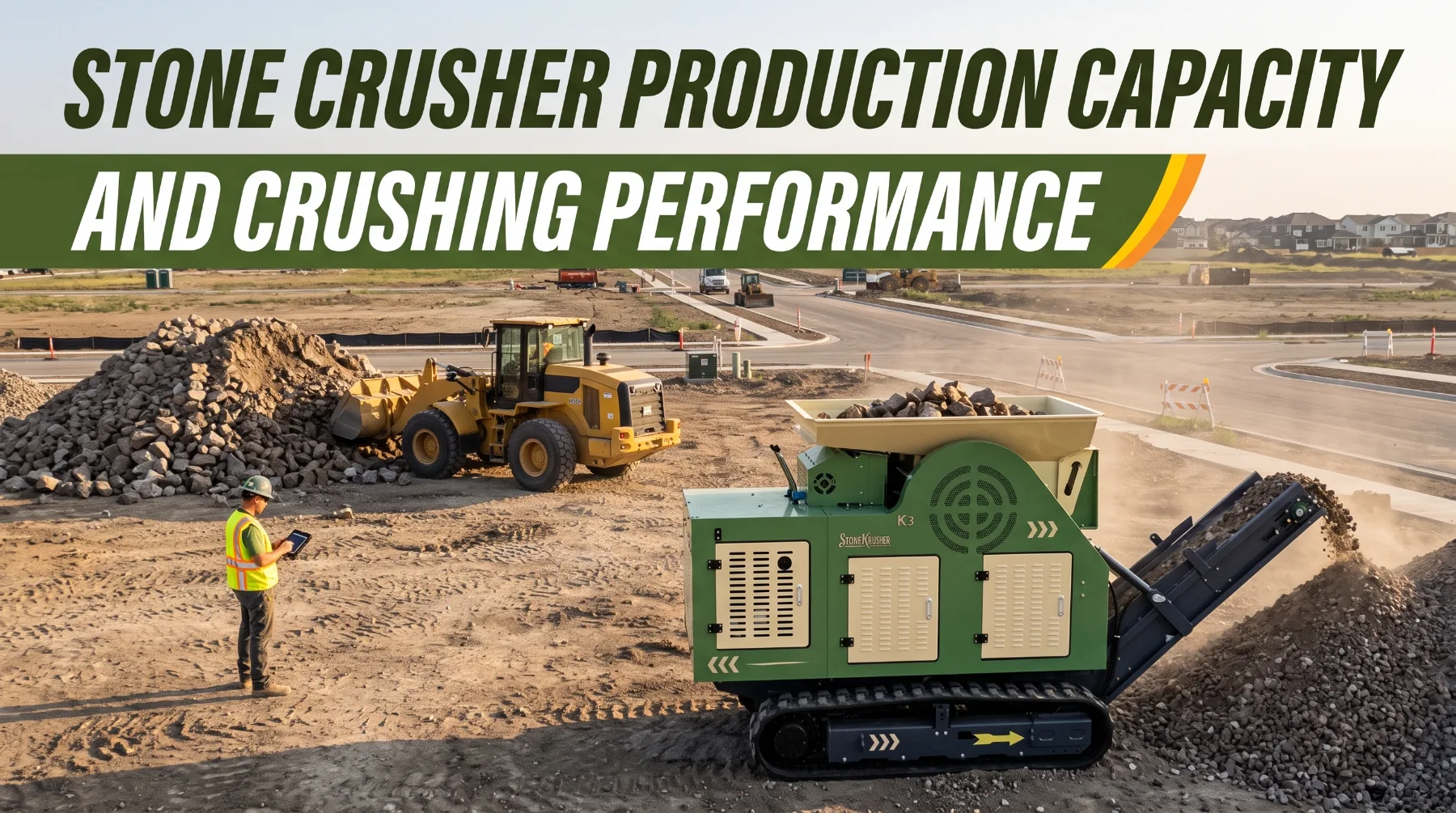
A site contractor bids on the road base for a new subdivision. The project requires a substantial amount of crushed base, and the site has plenty of rock available from the clearing and mass grading phase. The crusher's specification sheet lists a rated capacity that appears suitable for the job, so the contractor builds the schedule around that figure.
After several days of crushing, however, production falls behind the planned schedule. The rock turns out to be harder than expected, requiring more effort from the crusher. A newly assigned loader operator feeds the hopper in large, uneven bursts, causing the crushing chamber to alternate between overloaded and nearly empty. During a routine shutdown, the foreman also discovers worn crushing components that have not been replaced since the previous job.
The crew changes its approach. It replaces the worn components, sorts and stages the feed pile closer to the crusher, and coaches the loader operator on maintaining a steady feeding rhythm. The crew also begins recording actual tons produced each hour. Production improves, and the revised schedule, based on measured jobsite performance rather than the rated capacity alone, remains on track for the rest of the project.
The crusher was not necessarily the problem. The original plan relied too heavily on a single specification. Stone crusher production capacity indicates how much material a machine can process over a given period, but actual crushing performance depends on the material being processed, feeding consistency, machine condition, and operating practices. Understanding how these factors work together helps contractors create more realistic production estimates, schedules, and bids.
Understanding Production Capacity
Production capacity describes how much material a stone crusher can process over a specific period, usually measured in tons per hour. It provides a useful starting point for estimating project schedules, operating costs, and equipment requirements. However, manufacturer capacity ratings are normally based on specific conditions, such as a particular material type, feed size, discharge opening, and steady feeding. Since actual jobsites rarely match all of these conditions, rated capacity should be treated as a performance reference rather than a guaranteed production rate.
Actual output can vary with material hardness, density, moisture, composition, feed size, consistency, loading rate, machine condition, discharge setting, and operating practices. Wear on crushing components can also affect performance over time, while finer discharge settings generally reduce throughput. Productive hours are equally important when estimating daily output. A crusher scheduled for a 10-hour shift may produce for only 7 or 8 hours after accounting for startup, refueling, breaks, setting changes, inspections, and minor stoppages. Base production estimates on realistic productive hours rather than the total time the machine is scheduled to be on site.
Key takeaway: Production capacity, usually measured in tons per hour, is a valuable performance reference, but actual output depends on material, feed, machine condition, and how the crusher is operated.
Material Type and Hardness
The material being crushed directly affects how quickly a crusher can process it. Hard rock such as granite or basalt requires more crushing force and may reduce practical throughput, while softer or weathered rock can break more easily but may produce more fines. Dense material adds more weight to each load, affecting tonnage calculations and loader cycles. Recycled concrete and demolition material can also behave differently depending on reinforcement, piece size, and contamination. Abrasive materials increase wear on crushing components, which can gradually affect performance during long production runs.
Moisture and material composition can create additional challenges. Wet rock mixed with clay or soil may stick to surfaces, pack inside the chamber, and restrict material flow, while soil and clay can also affect the quality of the finished product. Before setting production targets, learn as much as possible about the material source and inspect the feed pile, especially after rain. Identify soil, debris, and other contaminants, and run a short test when practical to measure actual production. Using real material data helps create more realistic schedules and reduces the risk of unexpected production losses.
Key takeaway: Harder or denser materials can require more crushing effort and may reduce practical production rates, so evaluate the material before relying on rated capacity.
Crusher Condition
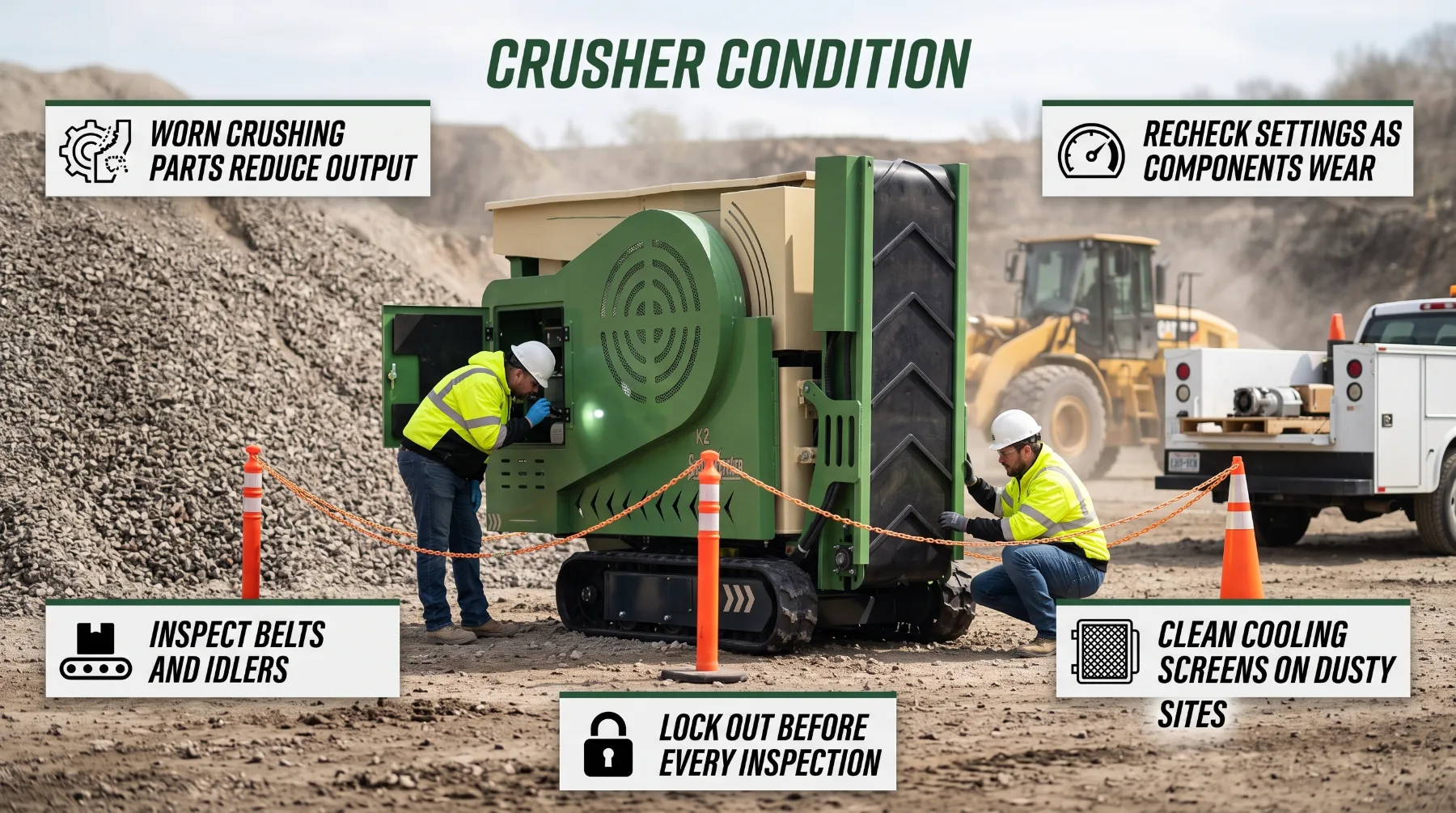
Machine condition has a direct effect on how close a crusher operates to its intended performance. As crushing components wear, the machine may produce less material per hour, deliver less consistent output, and work harder to break the same rock.
Wear builds gradually, which makes it easy to miss. Common condition-related causes of lost production include:
Worn crushing components: Jaw plates, liners, blow bars, or other wear parts that lose their profile reduce crushing efficiency.
Incorrect settings: Wear can change the effective discharge setting over time, affecting both size and throughput.
Conveyor problems: Worn belts, misaligned idlers, and material buildup slow material movement.
Engine and hydraulic issues: Clogged filters, low fluid levels, or dirty cooling surfaces reduce available power.
Loose or damaged components: Vibration loosens hardware, and damaged parts can force unplanned shutdowns.
Regular inspection keeps the machine performing as designed. Check wear parts according to the manufacturer's recommendations, and replace or rotate them before wear seriously affects output. Clean radiator and cooler screens, especially in dusty conditions. Inspect conveyor belts and idlers, and follow the scheduled service intervals for lubrication, filters, and fluids.
Safety comes first during every inspection. Shut down the crusher and follow the manufacturer's lockout procedures before accessing the crushing chamber, conveyors, or other moving components. Never reach into the hopper or chamber while the machine is running.
Key takeaway: Wear on crushing components and other systems can reduce performance over time, so regular inspection and maintenance help keep the crusher operating closer to its intended capability.
Feed Consistency
A crusher performs best when material enters the chamber at a steady, controlled rate. Underfeeding leaves the chamber below its productive capacity and reduces hourly output, while sudden overfeeding can cause hopper backups, bridging, and overloads. Irregular feeding can also make the finished product less consistent. To maintain a steady flow, confirm the crusher's maximum feed size and remove or reduce oversized pieces before loading. Sort out wood, steel, soil, and other contaminants, and stage the prepared material close enough to the crusher to keep loading cycles efficient. Match the loader bucket size and cycle time to the crusher's intake, add material in measured amounts, and monitor the hopper level throughout the shift.
Good coordination between the loader and crusher operators also helps maintain a consistent feed rate. Establish clear hand signals or radio communication so both operators can adjust the loading pace as conditions change. If the crusher is equipped with a feeder or vibrating grizzly, operate and monitor it according to the manufacturer's instructions. These systems can help meter material into the crushing chamber and, depending on the design, separate fines before they reach the crusher. A steady flow from the prepared feed pile through the loader and feeder helps the crusher maintain more predictable production while reducing unnecessary strain and blockages.
Key takeaway: A steady supply of properly sized material helps maintain a consistent crushing cycle and supports more predictable production.
Operator Practices
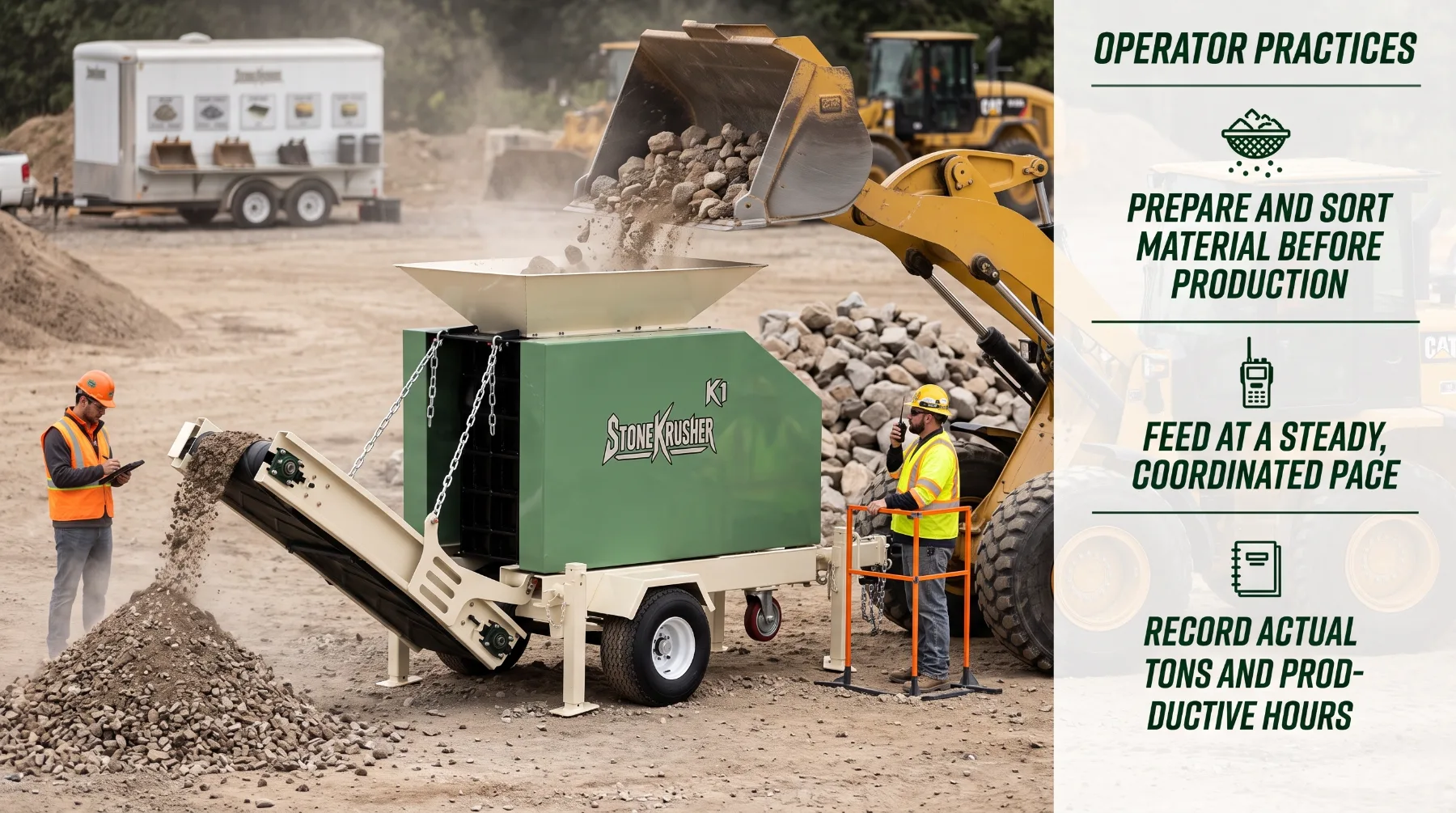
Two crews can achieve very different production rates with the same crusher and material because loading methods, feed consistency, material preparation, and machine operation all affect output. Before production, prepare the feed by removing contaminants and reducing oversized pieces, then maintain a steady feed rate without overfilling the hopper. Set the crusher for the required product rather than using a finer setting than necessary, as excessive reduction can lower throughput. During operation, monitor gauges, listen for unusual noises, watch the discharge flow, and check finished material at regular intervals to confirm it meets the required specification.
Training and consistent procedures help keep production predictable when operators change or crews rotate. Every operator should understand the machine's controls, feed requirements, setting adjustments, and the correct blockage-clearing and lockout procedures. New or temporary crew members should also be briefed on the site's setup, communication signals, and exclusion zones before starting work. Track daily tons produced, productive hours, and downtime causes to build reliable production data. Knowing the actual tons per hour achieved on specific materials can improve future scheduling and bidding while helping identify production problems before they become major delays.
Key takeaway: Loading methods, feed rate, material preparation, and machine operation all affect daily output, and consistent operating practices create a more predictable crushing process.
Capacity and Project Requirements
Choosing and scheduling a crusher requires comparing the project's production needs with what the machine can realistically deliver. Start by confirming the total tonnage, deadline, required output size and gradation, material type and condition, available productive hours, feeding and stockpile space, and the loading equipment available to keep the crusher supplied. Rated capacity provides a starting point, but actual production can vary with material hardness, moisture, contamination, feed consistency, and operating conditions. For example, a project requiring 5,000 tons of crushed base could produce about 400 tons per day if the crusher averages 50 tons per hour over 8 productive hours, requiring roughly 13 working days. If hard rock or wet conditions reduce production to 40 tons per hour, the same job would take about 16 working days.
The crusher should produce enough material at a practical rate while consistently meeting the required output specification. A high-capacity machine that cannot achieve the required gradation will not meet the project's needs, while a crusher that produces the correct material too slowly may cause schedule delays and higher costs. Use realistic production estimates rather than relying only on the machine's rated capacity, and allow for changes in material and site conditions. When the feed material, output requirements, or expected production rate is uncertain, discuss the project with the equipment supplier before selecting the machine or setting the production schedule.
Key takeaway: Compare expected production needs against the crusher's rated capacity while accounting for actual material and site conditions, so the machine delivers enough material at a practical rate.
Conclusion
Stone crusher production capacity provides a useful reference for crushing performance, but actual output depends on material characteristics, feed consistency, machine condition, settings, and operating practices. Hard, dense, wet, or inconsistent material can reduce practical throughput, while properly sized and steady feed helps maintain efficient chamber operation. Before production, operators should confirm the day's tonnage target and output specification, inspect the feed for oversized material, moisture, and contaminants, and prepare material that exceeds the crusher's feed limit. Crushing components, conveyor belts, idlers, fluids, and cooling screens should be inspected and maintained, while the crusher setting should match the required product. Recording tons produced, productive hours, and downtime provides a more realistic production rate for scheduling and estimating. Combining rated capacity with actual material conditions, equipment condition, feeding practices, and production records helps contractors plan reliable crushing output.
Frequently Asked Questions
What is stone crusher production capacity?
Stone crusher production capacity is the amount of material a crusher can process during a specific period, commonly measured in tons per hour (TPH). Rated capacity figures are usually based on defined material, feed, and operating conditions. Actual production can vary depending on the rock type, feed size, crusher settings, feeding method, and jobsite conditions.
Does material hardness affect crusher production?
Yes. Harder, denser, or more abrasive materials generally require greater crushing effort and can reduce practical production rates. Material structure also affects how easily it breaks. High moisture, sticky material, or contamination can interfere with material flow and further reduce throughput. Matching the crusher to the material helps maintain more consistent production.
Why is consistent feeding important?
A steady and properly sized feed helps keep the crushing chamber working efficiently. Consistent feeding reduces the risk of underloading or overloading and supports a more predictable flow of material through the crusher. It can also make output easier to monitor and help maintain more stable production throughout the work cycle.
Does crusher maintenance affect production capacity?
Yes. Worn crushing components, restricted cooling airflow, hydraulic problems, and conveyor issues can reduce production capacity and operating efficiency. Regular inspection helps identify wear, buildup, leaks, and damaged components before they affect performance. Following the manufacturer's maintenance schedule helps keep the crusher operating closer to its intended performance.