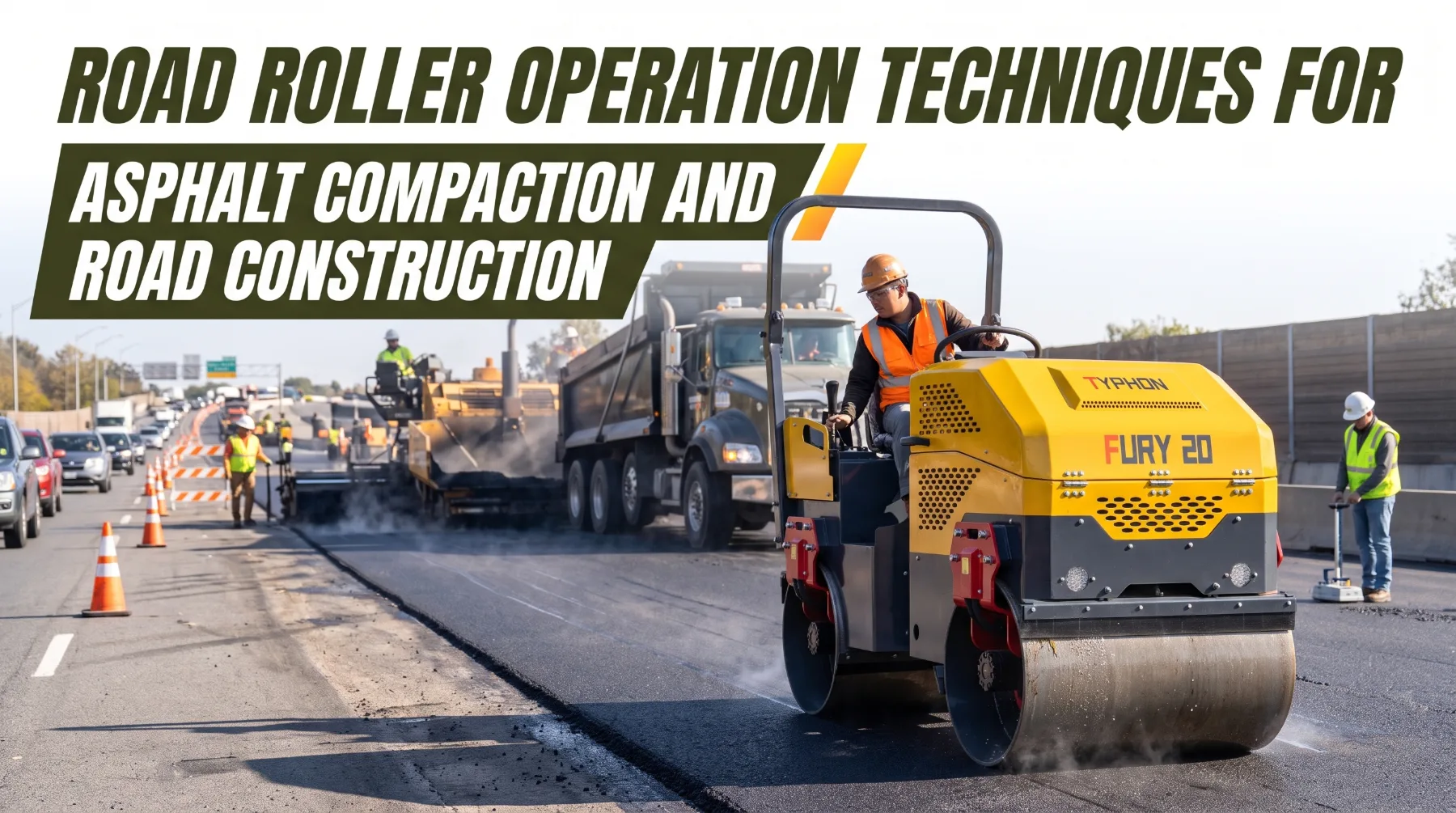
A freshly placed asphalt mat can look smooth and finished behind the paver, but appearance tells only part of the story. Beneath the surface, the mix is still loose and filled with air voids. Until a road roller compacts it to the specified density, that mat cannot carry traffic, resist water, or hold up through seasons of heat and freezing. Compaction is where a well-designed mix becomes a durable pavement, and it is also where many pavement problems begin.
Poor compaction leaves too much air in the mat. Water and oxygen then move through the pavement more easily, which can speed up aging, stripping, raveling, and cracking. Over-rolling or poorly timed rolling creates different problems, including surface marks, shoving, crushed aggregate, and uneven texture. In both cases, the pavement may need repairs long before the end of its intended service life.
Road rollers compact asphalt by applying static weight and, depending on the machine, vibration or kneading action. Equipment alone does not produce good results. Mix temperature, roller selection, rolling patterns, operating speed, vibration settings, and close coordination with the paving crew all decide whether the mat reaches its target density. Each of these factors depends on the others, and each requires attention from the first pass to the last.
Preparing the Asphalt Surface
Good compaction starts before the roller touches the mat. The quality of the base, the paving operation, and the condition of the mix all affect how well the asphalt responds to rolling.
Check the Foundation and Tack Coat
A roller can only compact asphalt against a firm, stable surface. Soft or yielding base material lets the mat deflect under the drum instead of densifying, which makes target density difficult to reach. Confirm that the base or existing pavement has been prepared, graded, and approved according to the project specifications. On overlays and multi-lift construction, check that the tack coat has been applied evenly at the specified rate so the new layer bonds properly to the surface below.
Inspect the Mat Behind the Paver
Walk the mat and look closely before rolling begins. Watch for segregation, where coarse aggregate collects in streaks or patches, as well as thin or thick spots, tears, drag marks, and uneven edges. These defects are far easier for the paving crew to correct before compaction than after. Report issues immediately so adjustments can be made at the screed while the material is still workable.
Respect the Temperature Window
Every asphalt mix has a temperature range in which it compacts effectively. Within that range, the binder remains fluid enough for aggregate particles to move closer together under the roller. As the mat cools, the binder stiffens and the mix resists further densification. Rolling a mat that has cooled too far wastes passes and can crush aggregate without improving density.
The suitable range depends on the mix design, binder grade, any warm-mix technology in use, and project specifications. Layer thickness, air temperature, wind, and base temperature all control how long that window stays open. Thin lifts placed on a cold, windy day can lose heat very quickly, while thick lifts in warm weather may stay workable much longer. Confirm the specified temperatures with the project team before paving begins, and plan roller placement so compaction starts promptly.
Key takeaway: Confirm a firm, prepared base and an even tack coat, inspect the mat for defects before rolling, and plan compaction around the mix's specified temperature window, which narrows quickly for thin lifts and cool, windy conditions.
Managing Roller Speed and Vibration
Speed and vibration settings control how much compaction energy each section of the mat receives. Getting them right is one of the most important skills a roller operator can develop. Apply these five practices to every paving operation.
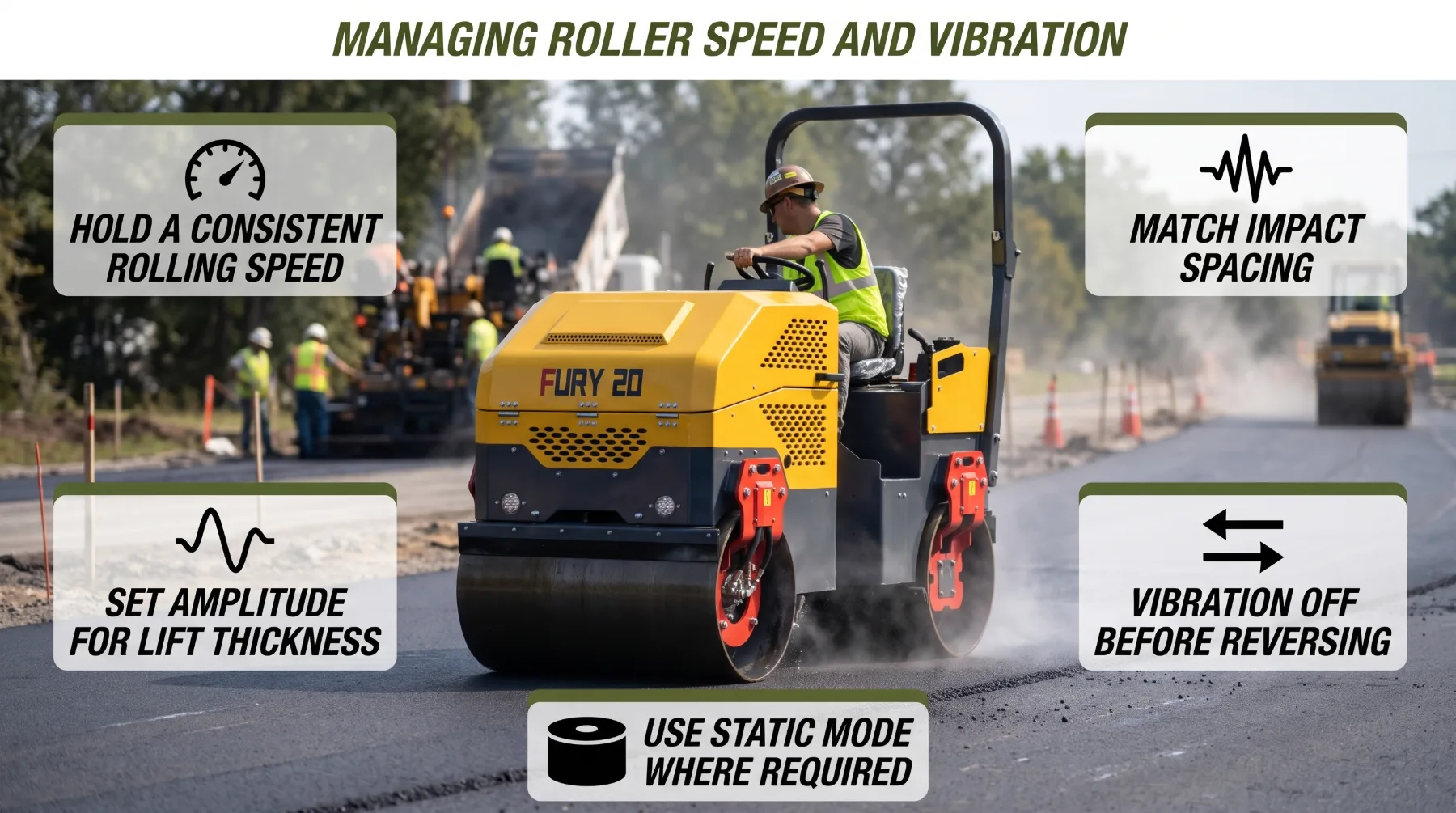
- Consistent Rolling Speed: Hold a steady speed that delivers uniform coverage, since excessive speed reduces compaction per pass while very slow rolling may fall behind the paver or mark the surface.
- Impact Spacing: On vibratory rollers, match travel speed and vibration frequency so impacts land closely enough along the mat to compact evenly without leaving ripples.
- Amplitude for Lift Thickness: Use settings suited to the layer, generally lower amplitude for thinner lifts and higher amplitude only where thicker lifts and the compaction plan allow.
- Vibration Control at Direction Changes: Turn vibration off before stopping or reversing and re-engage it only once the roller is moving, so the drum doesn't vibrate in place and dent the mat.
- Static Mode Where Required: Switch to static rolling for finish passes, very thin lifts, bridge decks, and areas near sensitive structures or utilities, as the compaction plan directs.
Why One Setting Doesn't Fit Every Job
Operators must follow manufacturer guidance and the approved compaction plan rather than using one setting for every mix or site. A setting that produces excellent density on a thick base course can crack aggregate, cause the drum to bounce, or create surface damage on a thin surface course. Stiff mixes, polymer-modified binders, and warm-mix asphalt may each respond differently.
Watch the mat closely during rolling. Ripples, checking, shoving, or a drum that appears to bounce often signal that speed, vibration, or timing needs adjustment. Some mixes also pass through a tender zone, a temperature range in which the mat moves under the roller and won't densify cleanly. When that happens, the compaction plan may call for pausing intermediate rolling until the mix stiffens slightly, then resuming. Report surface issues to the paving superintendent promptly so the crew can respond while the material is still workable.
Key takeaway: Maintain a steady speed, match impact spacing and amplitude to the lift thickness, turn vibration off before stopping or reversing, and use static rolling where the compaction plan requires it, adjusting settings whenever the mat shows signs of distress.
Establishing a Consistent Rolling Pattern
A rolling pattern defines how each roller moves across the mat, how many passes it makes, and how much each pass overlaps the last. A consistent pattern ensures every part of the mat receives the same compaction effort. Without one, some strips end up under-compacted while others are over-rolled.
Build the Pattern From a Test Section
Many projects establish rolling patterns on a test strip or control section at the start of paving. The crew rolls the mat using different pass counts and settings, while quality-control personnel measure density after each stage. The results show how many passes and which settings reach target density for that specific mix, lift thickness, and roller fleet. Once approved, the pattern becomes the standard for production paving, adjusted as conditions change.
Coverage, Overlap, and Sequence
Operators should follow the project's compaction plan, including the required sequence, number of passes, and overlap between passes. Overlap prevents narrow uncompacted strips from forming between drum widths. Count passes carefully and use consistent reference points along the mat so every lane width receives equal coverage.
Joints and edges need particular attention. Longitudinal joints are a common weak point in asphalt pavements because density is harder to achieve where new material meets an existing lane or a cooler adjacent pass. Follow the project's specified joint-rolling method. On unconfined edges, avoid pushing the drum too far over the edge, which can shove material outward and reduce density. Where the mat is placed on a crown or superelevation, many compaction plans call for rolling to progress from the low side toward the high side to limit shoving.
Coordinate With the Paver
Roller movement must stay in step with paver speed. If the paver advances faster than the rollers can cover the mat, sections will cool before they receive full compaction. If rollers outpace the paver, they may wait in place or make unnecessary passes. A steady paver speed, matched to plant production and truck delivery, helps rollers maintain a consistent pattern.
Avoid stopping a roller on the hot mat. A stationary drum can leave depressions that are difficult to remove. Make direction changes smoothly, and stagger stopping and reversing points so they don't line up across the mat and create a visible transverse ridge. Clear communication among the paver operator, screed crew, and roller operators keeps the whole train moving together.
Key takeaway: Establish rolling patterns through test sections and density checks, follow the approved sequence, pass count, and overlap, give joints and edges special attention, and coordinate roller movement with paver speed while avoiding stops on the hot mat.
Selecting the Right Road Roller
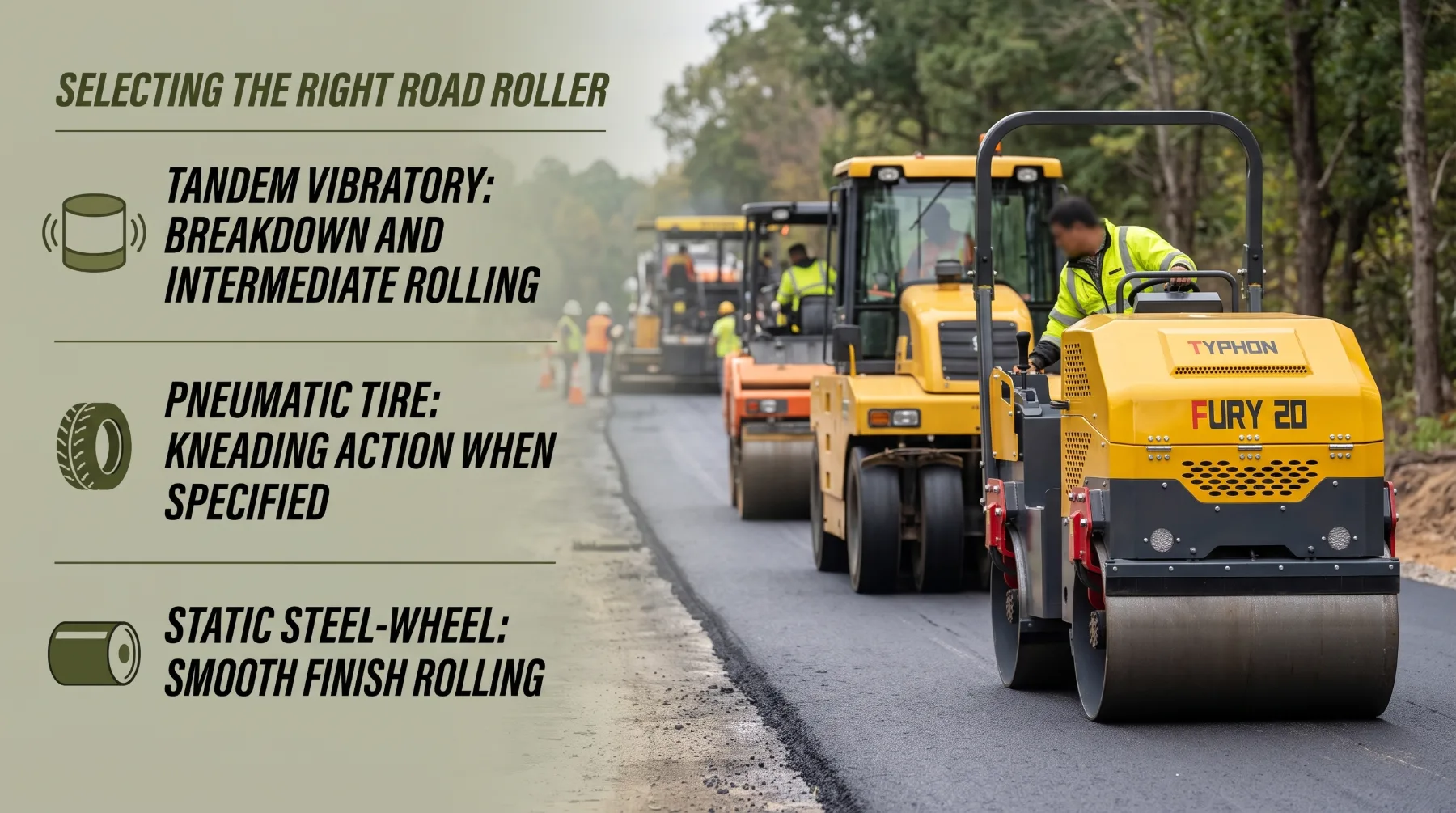
Different rollers perform different jobs in the compaction sequence. Most asphalt projects divide rolling into three phases: breakdown rolling, which achieves most of the density; intermediate rolling, which continues densification and seals the surface; and finish rolling, which removes marks and produces a smooth final texture. The right machine for each phase depends on the mix, layer thickness, and project requirements.
Tandem Vibratory Rollers
Tandem vibratory rollers use two steel drums, and one or both can vibrate. Vibration delivers repeated dynamic impacts that help aggregate particles move into a denser arrangement, which allows the roller to achieve density in fewer passes than static weight alone. That makes tandem vibratory rollers a common choice for breakdown and intermediate compaction. Many models allow operators to adjust amplitude and frequency to suit the lift thickness and mix. With vibration switched off, the same machine can also perform static finish rolling.
Static Steel-Wheel Rollers
Static steel-wheel rollers compact using machine weight only. They do not generate vibration, which makes them useful for finishing rolling in suitable conditions, where the goal is to iron out marks and produce a smooth surface. They may also serve on thin lifts, bridge decks, or areas where vibration could cause damage or disturb nearby structures. Their compaction effect depends heavily on machine weight and drum width.
Pneumatic Tire Rollers
Pneumatic tire rollers use multiple rubber tires, often arranged so rear tires cover the gaps between front tires. The flexing tires create a kneading action that helps orient aggregate and seal the surface. When the paving plan specifies them, they are often used for intermediate rolling. Tire pressure and ballast influence the contact pressure applied to the mat. Mix pickup on cool tires can be a problem, so many crews allow tires to warm on the hot mat and use approved release agents or water systems according to manufacturer guidance.
Matching Rollers to the Project
Equipment selection depends on the asphalt mix, layer thickness, production rate, project specifications, and required surface quality. Some mixes are prone to pickup or tenderness and call for specific roller types or timing. High-production paving may need more than one breakdown roller to keep pace with the paver. Review the compaction plan with the paving superintendent and quality-control personnel so the roller fleet matches the work.
Key takeaway: Tandem vibratory rollers commonly handle breakdown and intermediate compaction, static steel-wheel rollers often perform finish rolling, and pneumatic tire rollers add kneading action when specified, so select the fleet based on mix, lift thickness, production rate, and project requirements.
Monitoring Asphalt Temperature and Density
Compaction quality must be verified, not assumed. Temperature monitoring tells crews when to roll, and density testing confirms whether the rolling achieved its goal. Together, they allow adjustments while the mat can still respond.
Track Temperature Throughout Rolling
Asphalt temperature affects how readily the mix compacts. If the material cools too much before rolling is complete, the required density may become impossible to reach with additional passes. Poorly timed rolling can also cause marks, pickup, or other surface defects.
Crews commonly use infrared thermometers and probe thermometers to check mat temperatures behind the screed and during rolling. Some operations use thermal imaging or paver-mounted temperature scanners to detect cold spots and thermal segregation across the full width of the mat. Temperature differences often point to issues with truck delivery, material handling, or paver operation that can be corrected upstream. Always follow safe operating procedures, including wearing appropriate personal protective equipment, keeping clear of moving machinery, using designated communication signals, and following equipment manufacturer guidelines when checking temperatures near hot asphalt and operating paving equipment.
Verify Density
Project teams use approved density-testing methods to measure compaction. Nuclear density gauges and non-nuclear electronic gauges provide quick readings in the field, allowing crews to check results during production. Cores cut from the finished pavement are often used for acceptance testing because they provide a direct laboratory measurement of in-place density. Specifications typically define the required density, testing frequency, and acceptance criteria.
Some rollers are equipped with intelligent compaction systems that record pass counts, mat temperature, roller location, and compaction response in real time. These systems can help operators maintain consistent coverage and give quality-control teams a detailed record of the work. Where specified, use them according to the project requirements and the manufacturer's guidance.
Keep Communication Open
Roller operators should communicate with quality-control personnel throughout the shift. When density readings fall short, the crew may need to adjust pass counts, speed, vibration settings, or roller spacing behind the paver. When readings exceed expectations, the crew may be able to reduce unnecessary passes that waste time and risk over-compaction. Quick feedback keeps adjustments timely, while the material remains workable.
Key takeaway: Monitor mat temperature continuously, verify density with approved field gauges and cores, use intelligent compaction data where specified, and keep operators and quality-control personnel in close contact so adjustments happen while the mix is still workable.
Safety and Road Roller Maintenance
Road rollers operate in crowded, fast-moving work zones alongside paving crews, haul trucks, pavers, and public traffic. Paving is also time-sensitive, so equipment failures and incidents can quickly compromise both safety and pavement quality.
Protect the Crew
Rollers spend much of their time reversing, and visibility to the rear and sides can be limited. Establish clear communication between operators, the screed crew, and truck drivers before work begins. Define traffic routes for haul trucks entering and leaving the paver, and keep workers on foot away from pinch points between drums, frames, pavers, and trucks. Use spotters where required, and make sure backup alarms, lights, and cameras or mirrors where fitted are working.
Rollers also face tipping risks near unsupported edges, embankments, ditches, and steep cross slopes. Keep drums back from soft or unconfined edges, follow the manufacturer's slope limits, and always wear the seat belt where the machine is equipped with rollover protection. In live traffic zones, follow the project's traffic control plan and wear high-visibility clothing.
Keep the Machine Reliable
Follow the manufacturer's maintenance schedule for filters, fluids, lubrication, and vibration system service. Clogged spray nozzles or worn scrapers can allow asphalt to stick to drums and tear the mat surface. Hydraulic leaks can contaminate fresh asphalt and create soft spots. Clean drums and tires according to the manufacturer's guidance, using only approved release agents, since some products can damage the binder.
Shut down and secure the roller before any inspection or maintenance, following the required isolation procedures. Report faults promptly and keep maintenance records so recurring issues are addressed before they interrupt paving. A roller that breaks down mid-shift leaves the mat cooling with no way to finish compaction.
Key takeaway: Define traffic routes, keep people clear of pinch points and reversing paths, respect edge and slope limits, complete pre-use inspections on brakes, steering, warning devices, drums, scrapers, water systems, and vibration components, and maintain rollers on schedule to protect time-sensitive paving work.
Conclusion
Effective road roller operation turns a loose, freshly placed mat into a dense, durable pavement, and every stage of the process affects the result. A firm base, an even tack coat, and careful inspection behind the paver set up the mat for success, while respecting the mix's temperature window keeps compaction effective. Tandem vibratory, static steel-wheel, and pneumatic tire rollers each serve specific roles in breakdown, intermediate, and finish rolling, so the fleet should match the mix, lift thickness, and production rate. Approved rolling patterns with consistent passes and overlap, special attention to joints and edges, and close coordination with the paver deliver uniform coverage. Steady speeds, appropriate impact spacing and amplitude, and disciplined vibration control protect the mat from damage. Temperature monitoring, density testing, and open communication with quality control confirm the work meets specification, and strong safety practices with regular maintenance keep the operation running.
Frequently Asked Questions
Why is compaction important in asphalt road construction?
Compaction reduces air voids in the asphalt mat, which increases density, stability, and resistance to water and oxygen. A properly compacted pavement better resists rutting, cracking, raveling, and moisture damage under traffic. Inadequate compaction can significantly shorten pavement life and lead to early repairs.
Which road roller is used for asphalt compaction?
Tandem vibratory rollers, static steel-wheel rollers, and pneumatic tire rollers may all be used, depending on the mix and the project's compaction plan. Tandem vibratory rollers commonly handle breakdown and intermediate rolling. Pneumatic tire rollers add kneading action when specified, and static steel-wheel rollers often perform finish rolling.
How does asphalt temperature affect rolling?
Temperature controls how easily the asphalt mix compacts. When the mat is within its suitable range, aggregate particles move into a denser arrangement under the roller. If it cools below that range, the binder stiffens and achieving the specified density may become difficult or impossible.
How many passes should a road roller make?
There is no single number for every job. The required passes depend on the asphalt mix, layer thickness, roller type, operating settings, temperature, and project specifications. Follow the approved compaction plan, which is often established through a test section, and verify results through density testing.